



By Etnia Nativa
Etnia Nativa: Your peek into Native magic, healing the spirit.
Article by Etnia Nativa call us 592 2702 and book your experience!
Through this space, Etnia Nativa shares stories rooted in Aruba’s native heritage, encouraging a deeper appreciation of the island’s natural environment, cultural richness, and ancestral traditions.
In this episode, we explore one of the Caribbean’s most valuable natural treasures: coral reefs, the vital role they play in our oceans, and the growing threats they face as the planet warms.
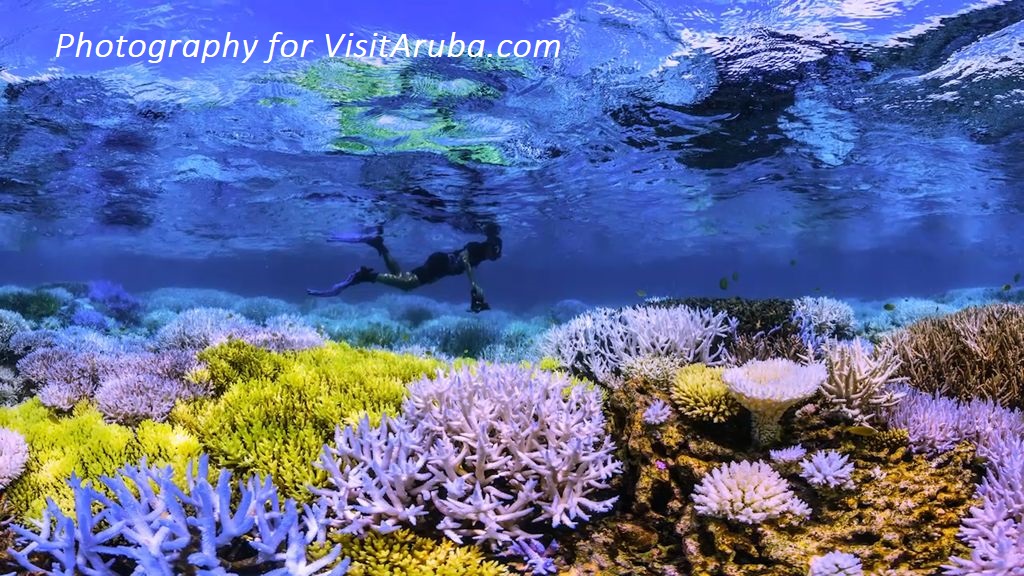
Surrounding Aruba and the wider Caribbean, coral reefs support marine biodiversity, sustain fisheries and tourism, and protect our coastlines. However, rising ocean temperatures are putting these fragile ecosystems at increasing risk, causing coral bleaching and reef degradation.
Corals are living animals that depend on a close relationship with microscopic algae, known as zooxanthellae, which live within their tissues. Through photosynthesis, these algae provide much of the energy corals need to survive and give reefs their vibrant colors. When ocean temperatures remain unusually high, this relationship becomes stressed, causing corals to expel their algae and turn white in a process known as coral bleaching.
Bleaching does not necessarily mean a coral is dead. If temperatures return to normal quickly enough, corals can recover. However, prolonged heat stress can weaken them, increase their susceptibility to disease, and eventually lead to death. As reefs deteriorate, countless marine species also lose essential habitats and food sources.
Yet, not all corals respond to extreme heat in the same way. Some naturally possess a greater ability to withstand unusually warm ocean temperatures. Scientists believe this resilience may be influenced by genetics, the microscopic algae living within coral tissues, and the environmental conditions in which corals grow.
These naturally heat-tolerant corals offer a glimmer of hope for the future of Caribbean reefs. By studying what makes them more resilient, researchers hope to identify beneficial traits that could help strengthen vulnerable coral populations. They are also investigating whether heat tolerance can be inherited, allowing resilient parent corals to pass these characteristics on to future generations.
Can Science Give Reefs a Helping Hand?
Scientists are exploring how naturally heat-tolerant corals could improve reef restoration. One approach involves growing resilient coral colonies in nurseries and transplanting them onto damaged reef areas.
Another developing field is known as assisted evolution, which investigates ways to support natural processes that help organisms adapt to changing environmental conditions. These approaches include selective breeding, identifying heat-tolerant genetic traits, and studying beneficial microorganisms associated with coral health.
However, natural resilience is not a guarantee of survival. Even heat-tolerant corals may struggle with repeated, prolonged, or increasingly intense marine heatwaves. Some may also possess other vulnerabilities. Scientific innovation can support conservation, but it cannot replace the urgent need to address climate change and reduce ocean warming.
For Aruba, protecting coral reefs means safeguarding much more than a beautiful underwater landscape. These ecosystems are essential to marine biodiversity, fisheries, tourism, and coastal protection. Understanding how our local coral populations respond to rising ocean temperatures is therefore an important step towards developing effective conservation strategies.
Scientific research offers reasons for cautious optimism. Nature has remarkable adaptive abilities, and science is gradually uncovering how these mechanisms might help protect vulnerable ecosystems.
The future of Caribbean coral reefs remains to be written. Perhaps these natural survivors can teach us how to better protect them. However, their survival will depend not only on their ability to adapt, but also on our commitment to protecting the oceans.
Because beneath every Caribbean Island lies a natural treasure worth safeguarding — and its future is closely connected to our own.
At Etnia Nativa, we believe that understanding and appreciating Aruba begins with discovering the deep connections between its nature, culture, history, and ancestral knowledge.
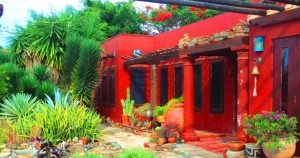
We invite you to continue this journey of discovery with us, not only through the stories we share here, but also by visiting Etnia Nativa, our unique cultural sanctuary in Noord, Aruba. Step into a space where the island’s natural and cultural heritage comes to life through stories, traditions, knowledge, and experiences that celebrate the richness of our native roots.
Discover Aruba beyond its beaches. Discover its soul, its heritage, and the stories that connect us to this land.
By appointment only. WhatsApp: +297 592 2702. Mail: etnianativa03@gmail.com