



(Oranjestad)— Every year on June 24th, the Aruban community come together and celebrates one of our most authentic traditions: Dera Gay*. This is a national celebration for us, and families and friends usually spend the day visiting several places around the island to delight in traditional cuisine, music, games, ambience and the famous Dera Gay Dance.
Brief history of Dera Gay
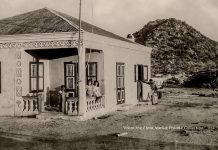
Dera Gay is a celebration with various origins and histories. The cultural festival of San Juan (St. John the Baptist), known locally as Dera Gay, dates back to 1862 and is celebrated every year on June 24th.
The origin story of this religious and cultural festival has several versions. The religious origin is associated with the birth date of St. John the Baptist, while the cultural origin is tied to the harvest festival. Although it has a religious aspect, Dera Gay is predominantly recognized as a cultural festival featuring music, dance, and singing. The dominant colors are red and yellow. Yellow symbolizes the flowering kibrahacha tree, while red represents the candle that is lit on the eve to announce the festival of the following day.
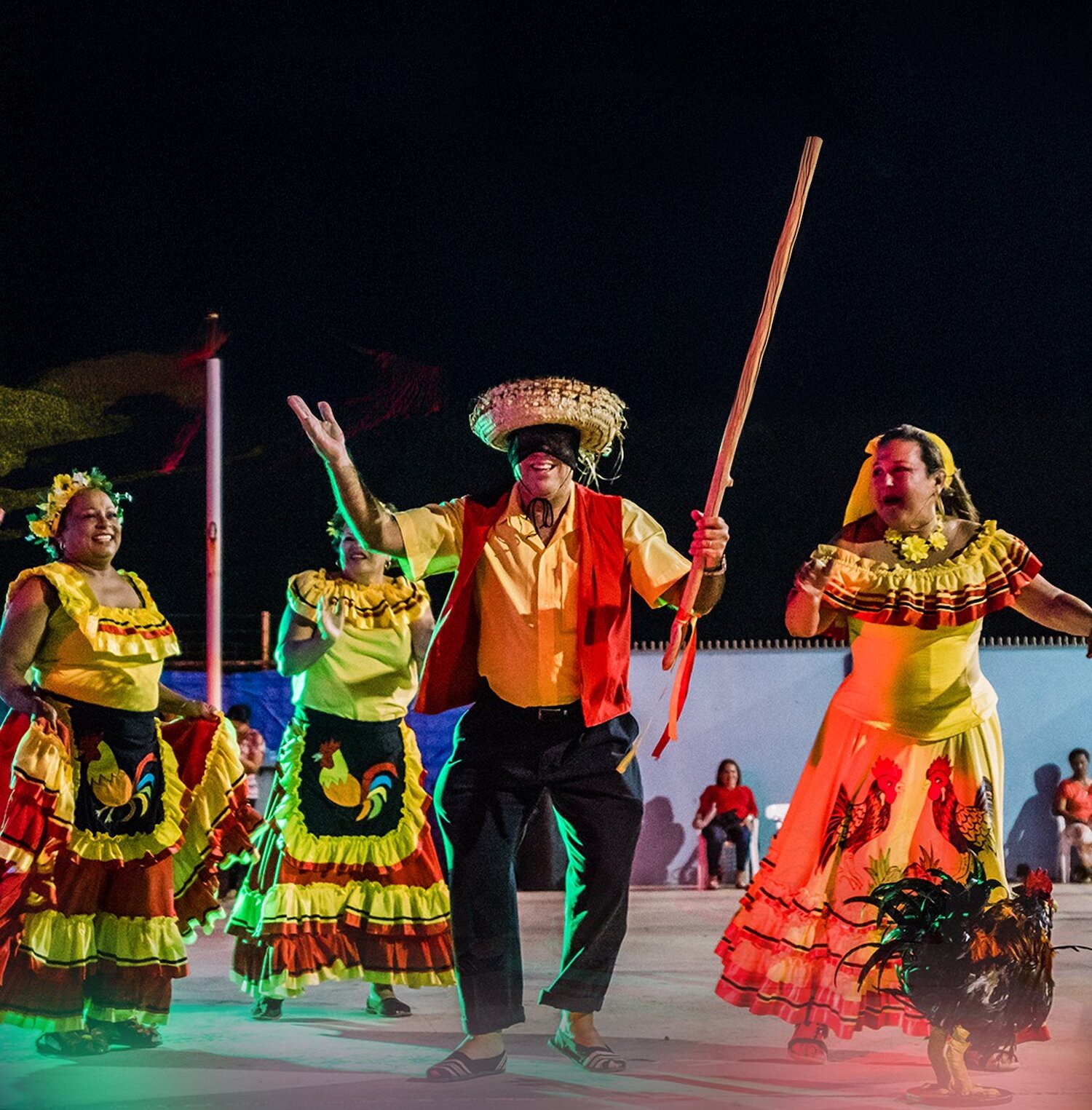
According to tradition, the festival begins on June 23rd when people light cornstalks as a symbolic cleansing to prepare for the new harvest season. On June 24th, after sunset, the celebration of San Juan starts in different districts with Dera Gay dance, candle dance, and flag dance. The candle dance is performed for protection against illness and bad luck. The most well-known dance is the Dera Gay, where a man, with his eyes covered and a stick in his hand, attempts to kill the “gay” (rooster). Previously, this dance took place in open fields with a live rooster.
Today, a dummy is used, and the dance takes place in clubs. Those who still perform the dance in the fields or on the ground use a calabash. There is also a flag dance, where small flags are placed on the ground and a person with their eyes covered by a cloth searches for the flags. The ceremony is accompanied by folk music.
The prominent musical instruments are the fio, wiri, and tambu. The Dera Gay chant dates back to 1862. Of course, this celebration is not complete without traditional local food and drinks. The festival of San Juan and Dera Gay regained popularity in the 1970s among the local population, and schools also started paying attention to this popular festival. “San Juan is coming, San Juan is going.”
Activity for the family!
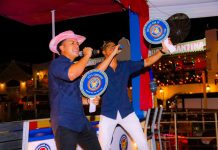
Don’t miss the special Dera Gay Parade, newly introduced for this year’s celebrations. From 4 p.m. to 8 p.m., see the parading cultural trailer that will showcase various performances from local artists. The trailer will start at Bushiri Complex, making two stops at Community Center Dakota (Centro di Bario Dakota) and Mabon Kavel, with a grand finale at Carnival Village in San Nicolas!