



Etnia Nativa: Your peek into Native magic, healing the spirit.
Article by Etnia Nativa call us 592 2702 and book your experience!
Long before air conditioning, insulated windows and modern construction materials, Aruba’s inhabitants had already discovered something contemporary architecture is only beginning to appreciate: a home should work with the climate, not against it.
Our ancestors understood the island’s sun, trade winds, scarce rainfall and natural resources. Their homes were not designed around technological comfort but around environmental intelligence. Today, as climate change intensifies temperatures and energy demands increase, these traditional building practices deserve a second look. Perhaps the future of sustainable architecture in Aruba lies hidden in its past.
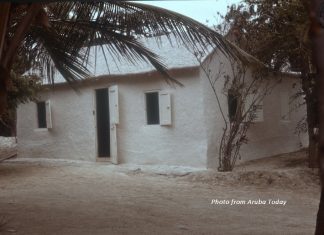
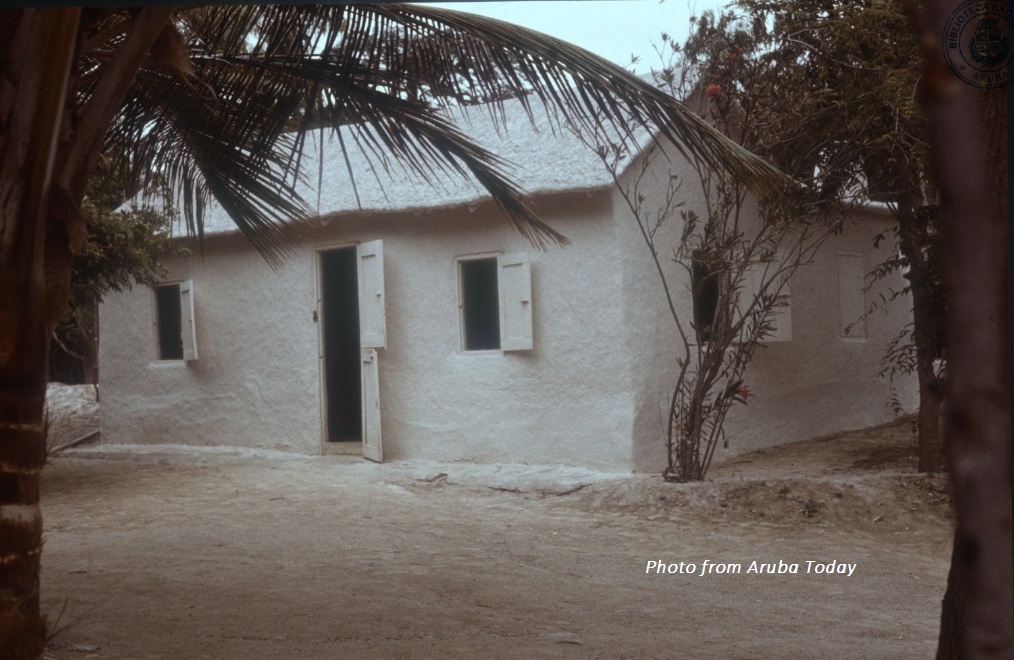
Among Aruba’s traditional building techniques was a construction method known locally as torto, an amalgamation of traditional Caquetío indigenous dwellings and New World architectural influences. A similar technique was practiced in Venezuela’s Paraguaná Peninsula during the 18th century, where it became known as bajareque. Learn more in our Episode 292: Earthy Homes, Lasting Charm, and Sustainable Living.
Using materials readily available on the island, builders created homes from wooden posts, branches, earth, water and natural plant fibers. Wooden posts, placed approximately half a meter apart, formed the structural skeleton. Branches filled the spaces between them, creating a framework that was covered with a mixture of clay, water and fibers from dry corn stalks, grasses and other local vegetation.
Later, aloe vera juice was also applied to the clay mixture, providing additional strength and protection against the elements.
Even the roofs reflected an intimate understanding of local resources. Cactus wood supported the beams, while corn stalks and, subsequently, the wooden heart part of columnar cacti were used as lattice for roofing materials. Floors were made from clay mixed with lime or cow dung.
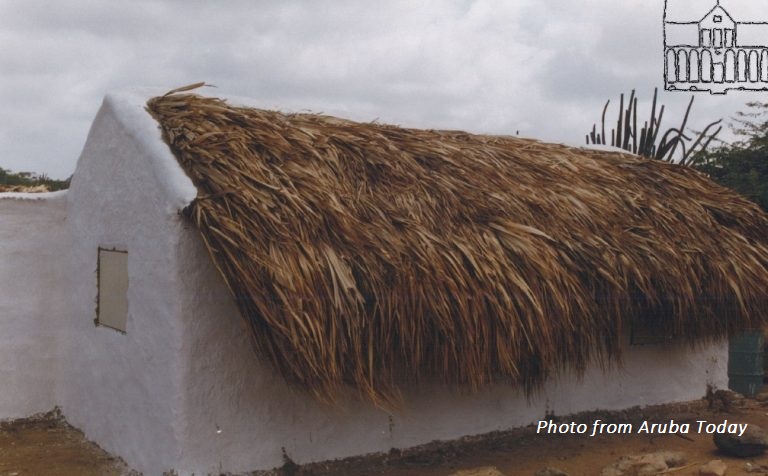
These were not simply inexpensive houses. They represented an intelligent response to the environmental conditions of an arid Caribbean island.
Traditional “cas di torto” generally included a kitchen, living room, terrace and bedroom. Families often lived together in relatively modest spaces, sleeping on mats on the floor.
Water conservation was essential. Rainwater collected from natural ponds was stored in wooden or metal barrels and in large clay containers inside the kitchen. Thick clay walls helped create a more stable indoor environment, offering protection against the island’s heat.
Many of these houses were inhabited by less fortunate families until approximately 1925, after which the technique gradually disappeared as stone or cinder blocks construction became more common. Yet, the disappearance of this architecture should not mean the disappearance of its knowledge.
Could mud be part of Aruba’s architectural future?
Today, progress is often associated with concrete, steel, glass and advanced cooling systems. However, these materials come with environmental costs, especially in hot climates.
Mud construction offers an alternative worth reconsidering. Its breathable nature helps regulate indoor humidity, while its thermal mass allows thick earthen walls to absorb heat during the day and release it at night, potentially reducing the need for air conditioning.
Imagine combining these traditional principles with modern engineering through rammed earth, adobe, reinforced structures, improved foundations and weather protection.
The goal is not to recreate the past, but to bring its wisdom into the future.
With proper attention to structural safety, moisture protection and Aruba’s climate, earthen construction could become a sustainable architectural option that combines traditional knowledge with modern innovation.
The future may be rooted in our heritage
As Aruba faces rising temperatures, increasing energy consumption and the environmental pressures of development, perhaps one of the most important questions is not how much more technology we can introduce into our homes, but how much wisdom we have forgotten. Our ancestors built with what the island provided. They understood that architecture was more than shelter: it was a relationship between people, nature and place.
Rediscovering torto is therefore not an exercise in nostalgia. It is an invitation to imagine a more climate-conscious Aruba, where cultural identity and sustainable innovation become partners.
If you wish to explore in to the deeper roots of Aruba’s identity, a visit to Etnia Nativa should be on your list. It is described as the Caribbean’s only living museum of its kind, offers a fascinating opportunity to connect with the island’s ancestral knowledge, contemporary native art, traditions and cultural heritage. A trendsetter since 1994, Etnia Nativa has also contributed to initiatives involving Arikok National Park, Archaeological Museum and many Artisan foundations.
For reservations and inquiries: WhatsApp +297 592 2702 etnianativa03@gmail.com