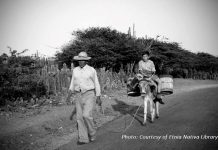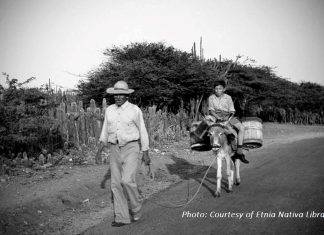





Aruba’s history runs far deeper than most visitors realize. On Etnia Nativa, we trace the island’s ancient paths each week, uncovering traditions and stories that continue to shape its cultural roots. In this episode, we explore Aruba’s colonial past-from Horses’ Bay to Oranjestad-and the enduring legacy of its earliest settlements.
Etnia Nativa: Your peek into Native magic, healing the spirit.
Article by Etnia Nativa call us 592 2702 and book your experience!
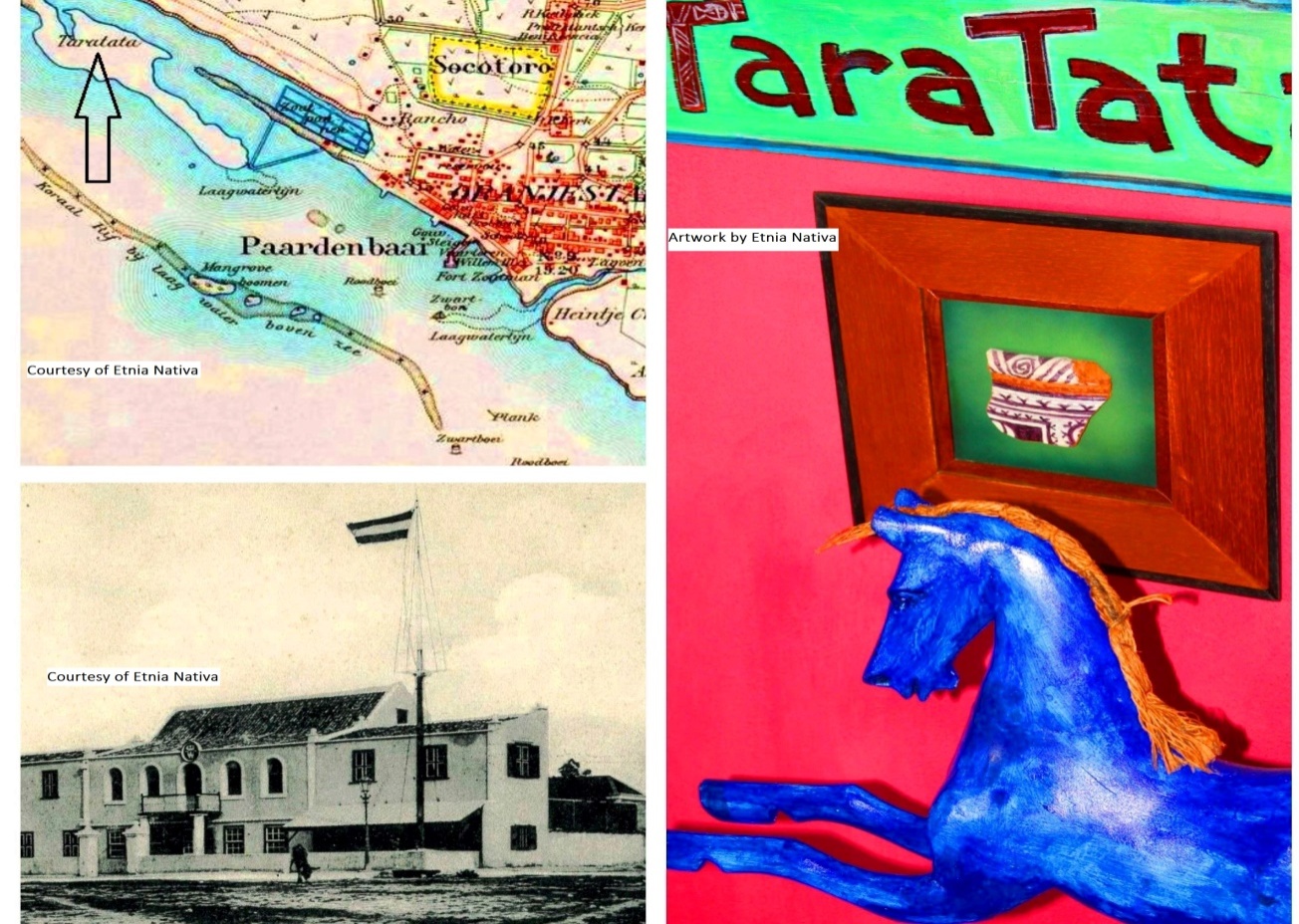
Aruba’s colonial past is a story of hardship, endurance, and survival, sustained by native knowledge, maritime trade, and strategic ambition. The area around-and later beyond-Horses’ Bay gradually became settled, primarily by descendants of the old Curaçao elite families connected to the WIC. This history is etched into the very soil of Horses’ Bay, Playa, Rancho, Para Mira, Ponton, and the surrounding areas, forming the foundation of what would eventually become Oranjestad.
In the eighteenth century, Aruba was sparsely populated by Europeans. Only the commander, his family, and a few officials of the West-Indische Company (WIC) called the island home. Yet, as trade with mainland America picked up, Horses’ Bay -a beach where horses disembarked and which offered superior nautical advantages compared to Commander’s Bay Harbour in Savaneta -gradually became the island’s new hub for mooring and unloading cattle.
Jewish merchants from Curaçao soon established homes on the high ground near Horses’ Bay, toward what is today Ponton. The bay itself remained untouched by European settlement and was dominated by a small Amerindian village along a narrow sea inlet. It was not until 1796–1797, with the construction of the first WIC battery, that the first European dwellings appeared, marking the beginning of permanent settlement.
Plans to fortify Horses’ Bay date back to 1762, driven by fears of privateer attacks, but high costs delayed construction. Meanwhile, growing trade reinforced the area’s importance, prompting the commander to move his residence to a vantage point near the bay, overlooking both the harbor and the Amerindian settlements to the north.
Jan van der Biest Jr., commander from 1772 to 1782, was buried at Ponton, though his grave was later partially obscured by masonry repairs. His brother Harmen succeeded him until 1791, followed by Jacobus Pellicorne Porrier and Borchard Specht, who married into the commander’s family and continued the Utrecht lineage.
By the early 19th century, a visiting historian could still examine remnants of the commander’s house, including the flagpole socket. Though prominent families had departed, goats and cows grazed nearby, and a clear view stretched across the strait to Paraguaná’s isthmus and St. Ann’s Hill-a quiet reminder of the island’s colonial roots.
The first buildings in Oranjestad appeared in 1797, and within thirty years, a small town had taken shape. The houses were modest, mostly one-floor structures, except perhaps the commander’s residence. Roofs varied: some fully tiled, others shingled, and the dwellings of the less wealthy were roofed with maize stalks, palm leaves, or the traditional mud mixture known as torto. Pre-constructed cane-and-branch cottages also dotted the landscape, while brick houses-almost all whitewashed with deep orange tiles-signaled wealth and status.
By 1827, growth had slowed. Oranjestad was divided into east and west halves. The eastern quarter, toward Dakota, had 77 houses, 33 of which were brick, marking the fashionable area. The western waterfront held 108 dwellings, with only 23 brick homes.
Disorderly construction plagued the town. Despite an 1822 regulation, some houses were built dangerously close to Fort Zoutman—less than fifty yards from its cannons, making it impossible for the garrison to fire on hostile ships without endangering residents. One house even stood just thirty meters away, blocking control of the surrounding countryside during times of unrest.
Today, these traces-from Horses’ Bay and Ponton to the streets of early Oranjestad-offer a vivid window into Aruba’s colonial era, a story of trade, defense, and the gradual imprint of European settlement on an island shaped as much by its people as by its rugged landscape.
From those eager to go beyond the surface of Aruba’s postcard beauty, Etnia Nativa offers something rare: a deeply personal encounter with the island’s ancestral soul. Rooted in the lineage of native Aruban families and pre-Columbian heritage, it invites visitors to step into history—not as observers, but as participants.
Because in Aruba, heritage is not just preserved—it is lived.
Personal experiences with Etnia Nativa are available by appointment:WhatsApp+297 592 2702 etnianativa03@gmail.com