




Washington, United States
U.S. Transportation Secretary Sean Duffy refused Tuesday to apologize for a nationwide shutdown of flights that stranded thousands of passengers, as the Trump administration pressed Congress for $50.1 billion to overhaul aging aviation infrastructure.
Duffy defended Friday’s four-hour suspension of takeoffs as a necessary safety precaution, even as officials acknowledged they had yet to establish precisely what caused the massive technical failure.
“Bryan and I do not apologize for shutting down the airspace,” Duffy told reporters at the US Capitol, referring to Federal Aviation Administration (FAA) chief Bryan Bedford.
He said the disruption was preferable to risking another disaster like the January 2025 midair collision between a passenger jet and a military helicopter near Washington, which killed 67 people.
Duffy also joined relatives of the victims of that tragedy Tuesday as he and Bedford visited Capitol Hill to brief Republican senators on the administration’s emergency funding request.
The appeal for $50.1 billion was formally submitted Tuesday in a letter to congressional appropriators, detailing how the money would be spent.
The administration wants $10.1 billion to upgrade air traffic control technology, including communications networks and tools for managing aircraft movements.
It is seeking another $10 billion each for airport infrastructure improvements, terminal modernization, five new regional air traffic control centers and the construction or upgrading of as many as 140 control towers.
– Unexplained failure –
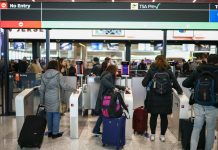
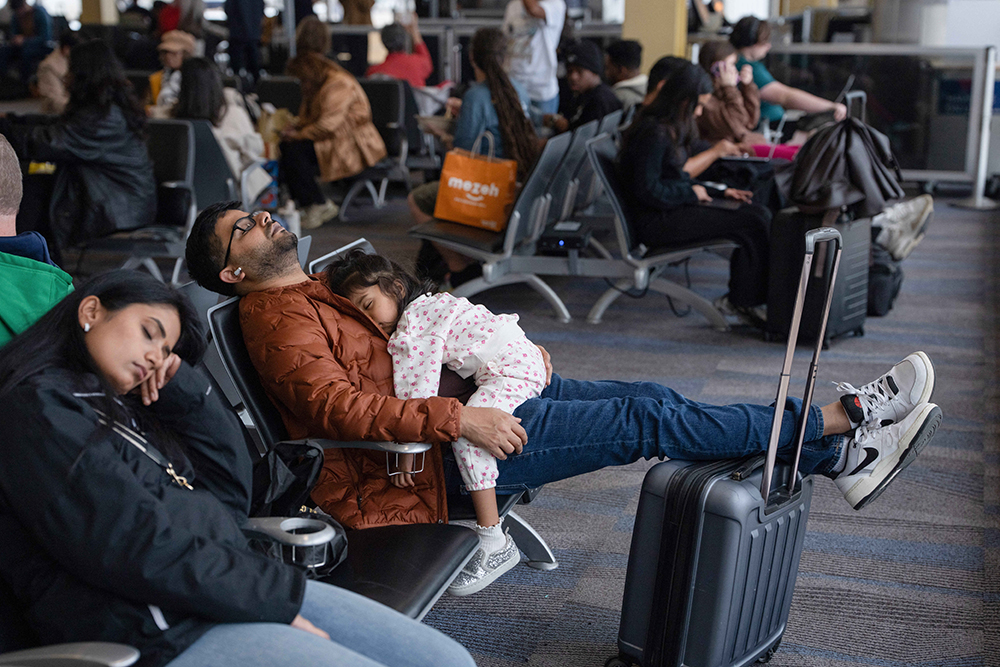
Friday’s nationwide ground stop, the longest since the September 11, 2001 attacks, forced the cancellation of thousands of flights and left airlines struggling to restore normal schedules for days.
Officials initially linked the failure to work replacing outdated copper communications lines with high-speed fiber cables.
But Bedford said Tuesday that investigators still did not understand why the installation of a new router appeared to have triggered widespread instability in the network.
“We don’t know the fault trigger,” he said, explaining that technicians had been unable to establish how the router’s configuration changed, allowing it to send data in a way that disrupted the system.
He said the FAA had suspended use of the routers under scrutiny while investigating the cause.
Duffy said the FBI was also assisting, although US intelligence agencies had indicated the disruption was not caused by a cyberattack.
The request for additional funding has drawn sharp criticism from Democrats, who accuse Duffy of mismanaging billions of dollars already provided to modernize the nation’s aviation systems.
Rosa DeLauro, the senior Democrat on the House Appropriations Committee, accused Duffy of demanding a “$50 billion ransom without a real plan to deliver.”
She and fellow Democrat James Clyburn said Sunday that $9.1 billion in previously approved funding remained unspent.
The Transportation Department said the $12.5 billion provided by Congress last year had already been allocated to modernization projects scheduled for completion by the end of 2028.
Duffy defended the pace of the overhaul Tuesday, saying his administration had converted more than half the aging communications network to modern technology in a year, compared with 19 percent over the previous four years.
He insisted he had inherited a deteriorating system and had repeatedly warned lawmakers that substantially more funding was needed to replace it.