

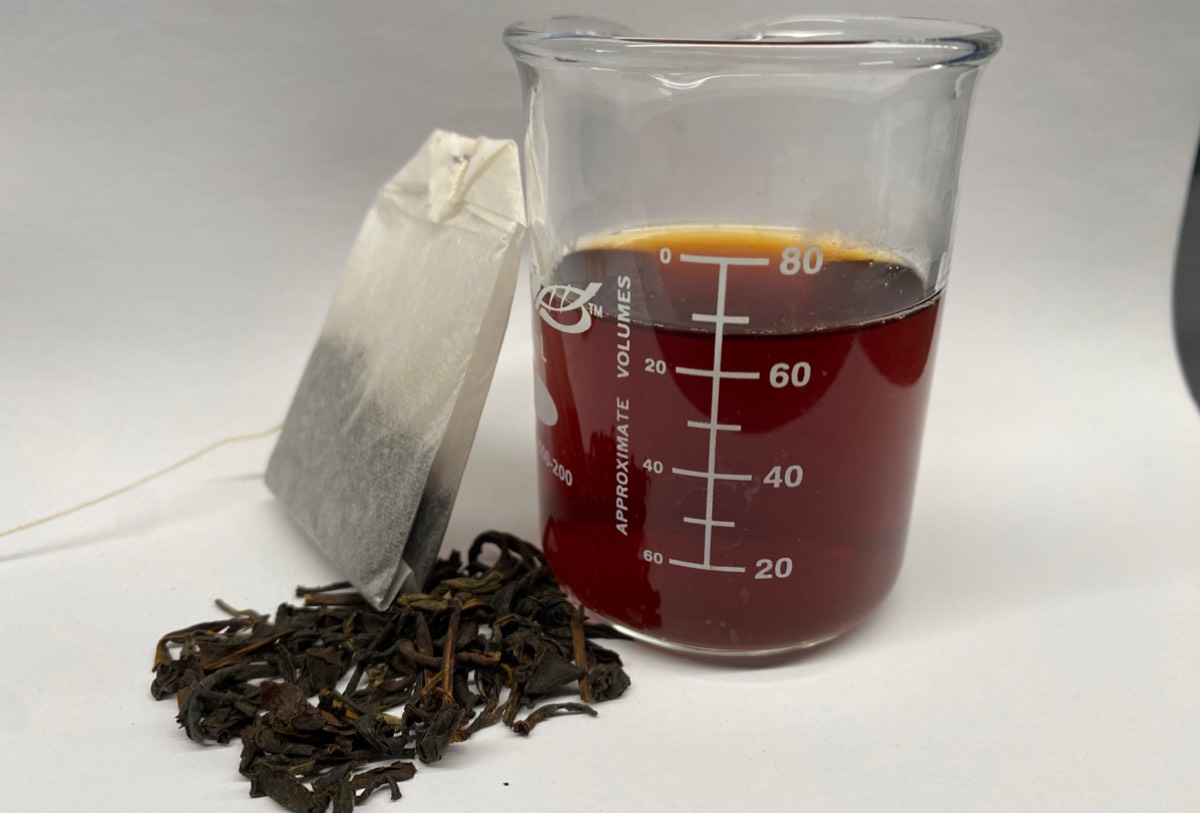




A revolutionary, low-cost water purification method designed like a standard teabag can eliminate up to 98% of toxic arsenic from contaminated drinking water.
For decades, arsenic contamination in groundwater has loomed as one of the world’s most severe, silent public health crises. Prolonged exposure to this naturally occurring heavy metal can lead to severe health issues, including skin lesions, cardiovascular disease, and multiple forms of cancer. Traditional filtration systems, such as reverse osmosis, are highly effective but remain financially and structurally out of reach for millions of families living in rural or low-resource regions.
Now, a brilliant scientific breakthrough published in the peer-reviewed journal ACS Omega is flipping the script on water purification. A team of researchers has developed a specialized, pocket-sized pouch that functions exactly like a teabag—but instead of brewing a morning beverage, it safely draws deadly toxins out of drinking water.
Remarkably, this innovation was co-authored and driven by Vick Tan, a New York high school student working under a mentorship program at the City University of New York’s Advanced Science Research Center (ASRC) alongside renowned chemist Adam Braunschweig.
The science inside the pouch
The initial inspiration for the project sparked from an unusual discovery: when ordinary tea is brewed, heavy metals naturally stick to the tea leaves and standard teabag fibers through a process called biosorbency. Recognizing this untapped potential, the research team set out to engineer a purpose-built pouch optimized exclusively for heavy metal remediation.
Instead of traditional dried tea leaves, these specialized cellulose-based bags are packed with two highly effective, eco-friendly arsenic adsorbers: magnetic iron oxide nanoparticles and pulverized eggshells.
The iron oxide nanoparticles act like microscopic magnets, chemically locking onto arsenic ions dissolved in the water. Meanwhile, the crushed eggshells—a widely available agricultural byproduct—help maintain a stable, optimal pH balance within the water, ensuring that the heavy metals remain securely trapped inside the bag rather than dissolving back into the liquid.
The laboratory results have been nothing short of extraordinary. In rigorous testing, a single engineered teabag removed over 98% of arsenic contamination from water samples within a six-hour soaking window. Most notably, when tested against water samples meticulously prepared to mimic heavily contaminated well water from Bangladesh, the humble pouch successfully dropped the arsenic levels well below the World Health Organization’s (WHO) strict safety limits for human consumption.
Affordable, reusable, and accessible
What makes this breakthrough a true beacon of hope for global health is its sheer affordability and ease of deployment.
Industrial water purification infrastructure can cost communities thousands of dollars to construct and maintain. In stark contrast, the researchers calculate the manufacturing cost of this purifying teabag to be a mere 7 US cents per liter of treated water.
Furthermore, the bags are sustainably designed for multiple uses. After a soaking cycle is complete, a used bag can be gently rinsed, washed in a mild alkaline solution, and dried. The team noted that a single bag can be reused up to five times, experiencing only a modest 19% to 20% drop in extraction efficiency with each subsequent cycle.
To maximize the real-world impact of the system, the scientific team simultaneously created a low-cost, companion chemical test. This simple indicator turns water a distinct yellow shade in the presence of heavy metals, giving remote communities a rapid, on-site detection tool without the need for expensive lab instrumentation.
Empowering global communities
The decentralized nature of this technology means it can be shipped easily to remote villages, distributed seamlessly during natural disaster relief efforts, or utilized by everyday travelers. It puts the power of public health directly into the hands of the individuals who need it most.
“Clean drinking water should not depend on access to expensive infrastructure,” Tan emphasized in an official CUNY ASRC release regarding the publication. “Our research shows that simple, low-cost materials can be engineered into scalable solutions for one of the world’s most urgent public health challenges.”
By transforming a routine household concept into a lifesaver, these scientists are proving that solving global crises doesn’t always require millions of dollars in infrastructure—sometimes, it just takes a fresh look at a daily ritual.