




Etnia Nativa: Your peek into Native magic, healing the spirit.
Article by Etnia Nativa call us 592 2702 and book your experience!
Long before Aruba became known for its tourism, another treasure helped sustain the island’s people. It was not gold or oil, but salt—a simple mineral that for centuries preserved food, fueled trade, and provided income for countless Aruban families.
Through Island Insight, Etnia Nativa invites readers to discover Aruba from a different perspective by exploring the island’s rich intangible cultural heritage: the traditions, knowledge, and practices passed down from generation to generation. This edition looks back at the history of salt, a resource that shaped civilizations around the world and left its own remarkable imprint on Aruba.
Salt is indispensable to human life. It regulates essential bodily functions, including the nervous system, muscle activity, and hydration. Because of its importance to both people and livestock, salt has been prized since prehistoric times. Archaeological evidence shows that humans were producing salt by evaporating seawater as early as the Neolithic period, around 6000 BCE.
One of Europe’s earliest centers of salt production was Solnitsata, in present-day Bulgaria. The settlement prospered by supplying salt throughout the Balkans, becoming one of the continent’s oldest examples of an economy built around this precious mineral.
Ancient civilizations, including the Greeks and the Chinese, considered salt a valuable commodity. During Roman times and throughout the middle Ages, it became known as “white gold.” Roman roads facilitated its transport across the empire, and although it is often said that the English word salary derives from Roman soldiers being paid in salt, historians generally regard this story as a popular tradition rather than an established fact. The Latin salarium may instead have referred to an allowance related to the purchase of salt.
Salt’s greatest value lay in its ability to preserve food. Long before refrigeration, sailors depended on it to preserve fish, meat, bacon, and vegetables during months-long voyages across the oceans. Without salt, the great maritime expeditions that connected continents would have been nearly impossible.
When Dutch navigators reached the southern Caribbean, they recognized the immense value of the natural salt flats of the Araya Peninsula in present-day Venezuela. Vast quantities of salt were harvested there and shipped to Europe each year. This profitable enterprise came to an abrupt end in 1665 when Spanish forces expelled the Dutch and ended their illegal extraction activities.
Following this setback, the Dutch West India Company redirected its attention to the ABC Islands—Aruba, Bonaire, and Curaçao. Bonaire would eventually become one of the Caribbean’s most important salt-producing islands, and its iconic white salt pyramids remain enduring symbols of that historic industry.
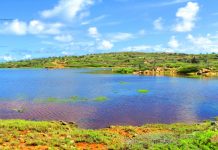
Aruba also played its part. The island’s Western Wetlands, covering approximately 392 hectares, include five coastal salt lagoons, or saliñas. Today these wetlands are recognized as valuable ecosystems and serve as important resting grounds for hundreds of migratory birds traveling between North and South America. Yet long before they became conservation areas, they were places of hard labor.
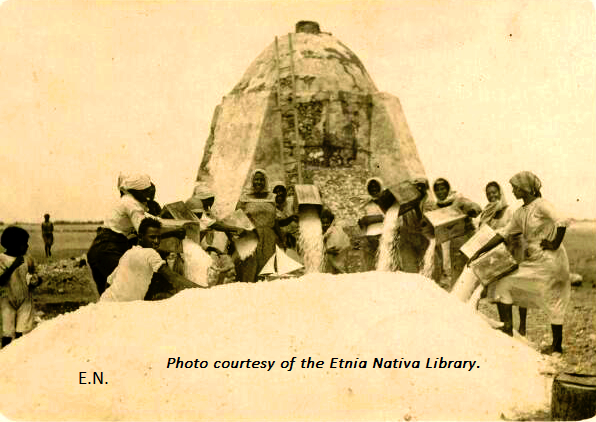
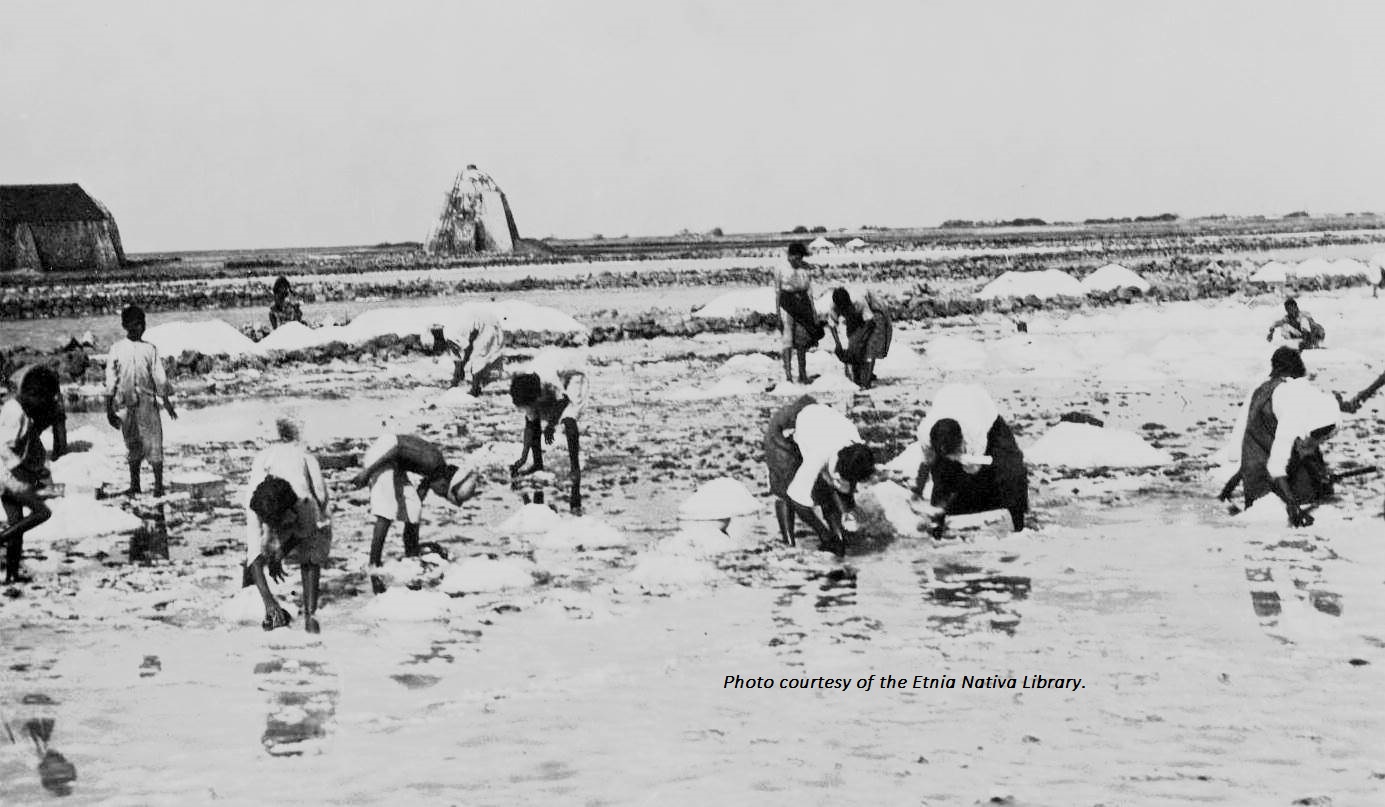
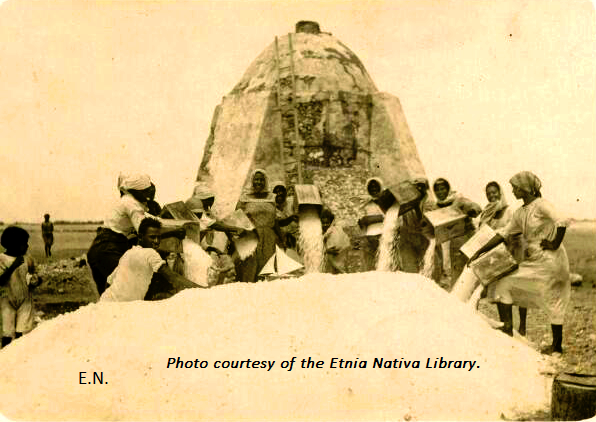
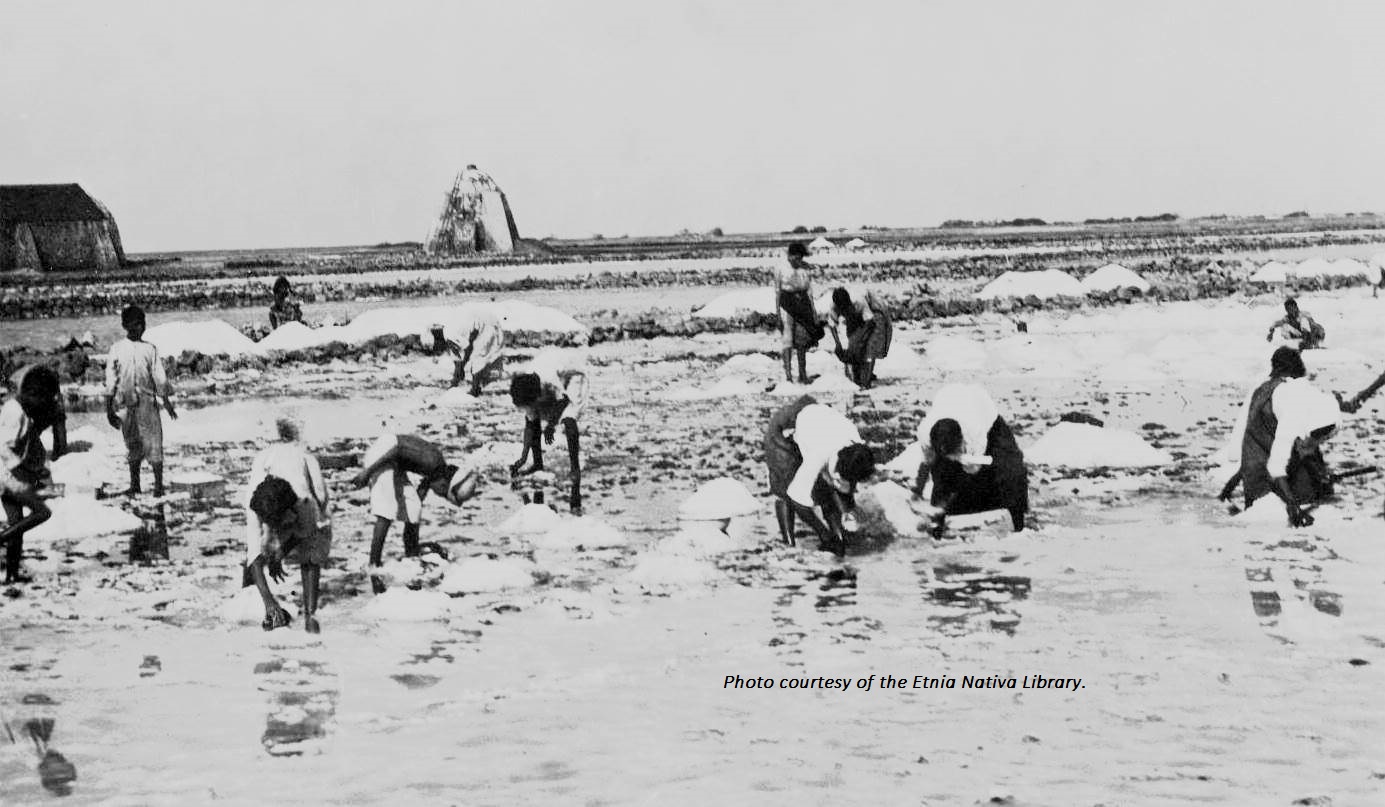
For generations, Aruban workers harvested salt by hand. Men and women stood barefoot in the mud under the blazing Caribbean sun, collecting the crystallized mineral with little more than their hands and simple tools. The work was physically demanding, but it provided a livelihood for many island families during a time when economic opportunities were scarce.
The landscape of Oranjestad has changed dramatically since then. When the harbor was expanded in 1949, several of the town’s salt pans disappeared beneath reclaimed land, forever altering part of Aruba’s historic coastline.
Salt was also harvested in Savaneta, where seawater was allowed to enter the pans during high tide. Once the basins were filled, sluice gates were closed to trap the seawater. The tropical sun then did the rest, evaporating the water until a layer of salt crystals formed on the muddy surface, ready to be collected.
Today, the remaining saliñas stand as silent witnesses to an industry that once helped sustain Aruba. They remind us that before the island became a world-renowned tourist destination, its people relied on the gifts of nature, hard work, and traditional knowledge passed from one generation to the next.
Remembering the history of salt is more than recalling an old occupation. It is about honoring the resilience of the Aruban families whose labor transformed a humble mineral into one of the island’s most valuable resources—and whose legacy remains an essential part of Aruba’s cultural heritage.
Don’t just visit Aruba—discover its soul. Reserve your mystical cultural experience with Etnia Nativa today and immerse yourself in the island’s ancestral heritage before your trip ends.
WhatsApp: +297 592 2702Email: etnianativa03@gmail.com
White Gold: How Salt Sustained Aruban Families EpisodeCCCLXII – 362
Etnia Nativa:Yourpeek into Nativemagic, healing the spirit.
Article by Etnia Nativa call us 592 2702 and book your experience!
Long before Aruba became known for its tourism, another treasure helped sustain the island’s people. It was not gold or oil, but salt—a simple mineral that for centuries preserved food, fueled trade, and provided income for countless Aruban families.
Through Island Insight, Etnia Nativa invites readers to discover Aruba from a different perspective by exploring the island’s rich intangible cultural heritage: the traditions, knowledge, and practices passed down from generation to generation. This edition looks back at the history of salt, a resource that shaped civilizations around the world and left its own remarkable imprint on Aruba.
Salt is indispensable to human life. It regulates essential bodily functions, including the nervous system, muscle activity, and hydration. Because of its importance to both people and livestock, salt has been prized since prehistoric times. Archaeological evidence shows that humans were producing salt by evaporating seawater as early as the Neolithic period, around 6000 BCE.
One of Europe’s earliest centers of salt production was Solnitsata, in present-day Bulgaria. The settlement prospered by supplying salt throughout the Balkans, becoming one of the continent’s oldest examples of an economy built around this precious mineral.
Ancient civilizations, including the Greeks and the Chinese, considered salt a valuable commodity. During Roman times and throughout the middle Ages, it became known as “white gold.” Roman roads facilitated its transport across the empire, and although it is often said that the English word salary derives from Roman soldiers being paid in salt, historians generally regard this story as a popular tradition rather than an established fact. The Latin salarium may instead have referred to an allowance related to the purchase of salt.
Salt’s greatest value lay in its ability to preserve food. Long before refrigeration, sailors depended on it to preserve fish, meat, bacon, and vegetables during months-long voyages across the oceans. Without salt, the great maritime expeditions that connected continents would have been nearly impossible.
When Dutch navigators reached the southern Caribbean, they recognized the immense value of the natural salt flats of the Araya Peninsula in present-day Venezuela. Vast quantities of salt were harvested there and shipped to Europe each year. This profitable enterprise came to an abrupt end in 1665 when Spanish forces expelled the Dutch and ended their illegal extraction activities.
Following this setback, the Dutch West India Company redirected its attention to the ABC Islands—Aruba, Bonaire, and Curaçao. Bonaire would eventually become one of the Caribbean’s most important salt-producing islands, and its iconic white salt pyramids remain enduring symbols of that historic industry.
Aruba also played its part. The island’s Western Wetlands, covering approximately 392 hectares, include five coastal salt lagoons, or saliñas. Today these wetlands are recognized as valuable ecosystems and serve as important resting grounds for hundreds of migratory birds traveling between North and South America. Yet long before they became conservation areas, they were places of hard labor.
For generations, Aruban workers harvested salt by hand. Men and women stood barefoot in the mud under the blazing Caribbean sun, collecting the crystallized mineral with little more than their hands and simple tools. The work was physically demanding, but it provided a livelihood for many island families during a time when economic opportunities were scarce.
The landscape of Oranjestad has changed dramatically since then. When the harbor was expanded in 1949, several of the town’s salt pans disappeared beneath reclaimed land, forever altering part of Aruba’s historic coastline.
Salt was also harvested in Savaneta, where seawater was allowed to enter the pans during high tide. Once the basins were filled, sluice gates were closed to trap the seawater. The tropical sun then did the rest, evaporating the water until a layer of salt crystals formed on the muddy surface, ready to be collected.
Today, the remaining saliñas stand as silent witnesses to an industry that once helped sustain Aruba. They remind us that before the island became a world-renowned tourist destination, its people relied on the gifts of nature, hard work, and traditional knowledge passed from one generation to the next.
Remembering the history of salt is more than recalling an old occupation. It is about honoring the resilience of the Aruban families whose labor transformed a humble mineral into one of the island’s most valuable resources—and whose legacy remains an essential part of Aruba’s cultural heritage.
Don’t just visit Aruba—discover its soul. Reserve your mystical cultural experience with Etnia Nativa today and immerse yourself in the island’s ancestral heritage before your trip ends.
WhatsApp: +297 592 2702Email: etnianativa03@gmail.com