



Etnia Nativa: Your peek into Native magic, healing the spirit.
Article by Etnia Nativa call us 592 2702 and book your experience!
By Etnia Nativa
Continuing the conversation begun in “The Aruba We Inherited, the Aruba We Leave Behind” (Episode CCCLXXIV, 374).
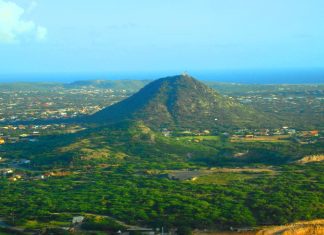
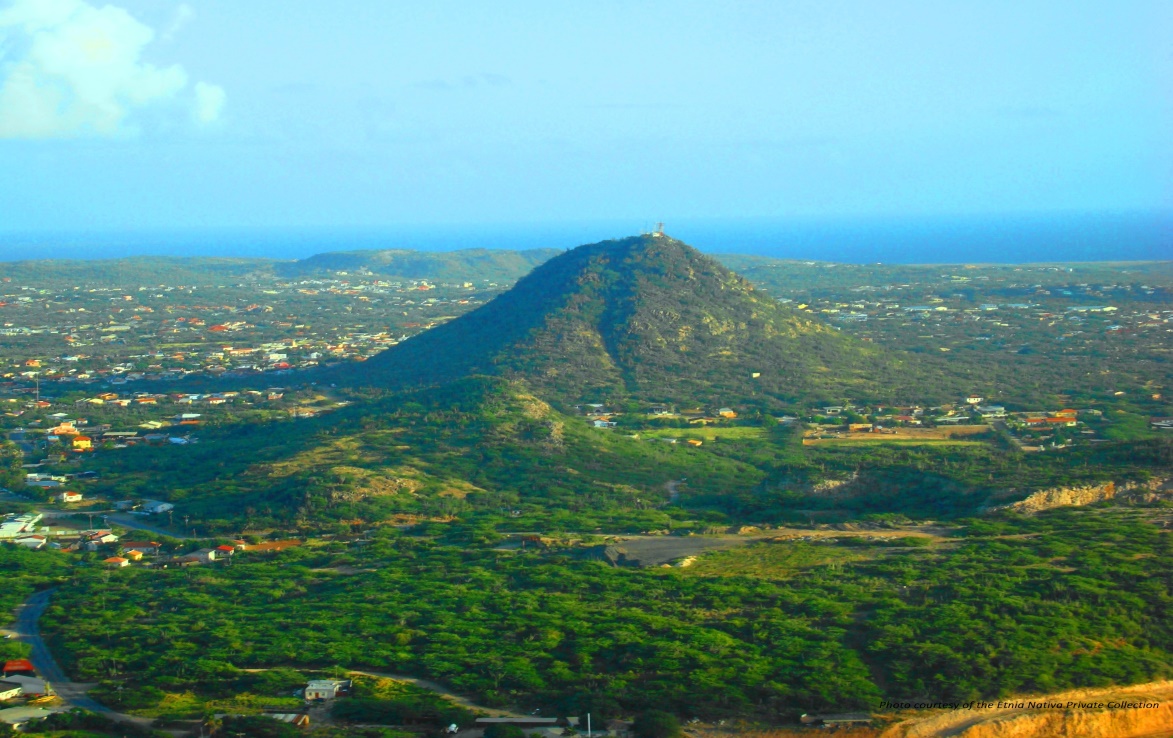
We become familiar with a place long before we truly understand it. We recognize Aruba’s roads, divi-divi trees, cacti, and rock formations, yet familiarity can create the illusion of knowledge.
But, familiarity is not understanding.
A landscape becomes more than scenery when we learn to interpret it—to ask why things grow where they do, how the land has shaped human choices, and what it reveals about the relationship between people and their environment.
Consider the cactus. We recognize it as a symbol of Aruba’s arid landscape, but looking closer reveals a lesson in adaptation, biodiversity, and survival. The cactus has not changed. Our understanding of it has.
The difference is not in what we see, but in what we have learned to discern.
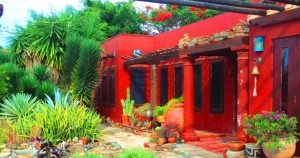
The same applies to a traditional cunucu house, an old place name, a stone formation, or a path through the countryside. Each holds clues to how people understood their surroundings, used available resources, and adapted to the island’s conditions.
The challenge is to move beyond recognition and begin asking questions. Why was a house built that way? What can a place name reveal about its history? How did earlier generations learn to live with limited water and natural resources?
Such questions transform familiar surroundings into opportunities for discovery. Yet modern life often encourages us to move quickly, photograph places, and recognize landmarks without exploring their deeper meaning. We can see Aruba every day without becoming more knowledgeable about it.
Learning to interpret our surroundings is about more than curiosity. It can inform how we approach water scarcity, biodiversity, land use, and development. Traditional knowledge offers valuable observations, while modern science helps us investigate, test, and expand our understanding. Both require us to remain curious, examine evidence, and question what we assume to know.
To read a landscape is not to assume we already understand it. It is to observe carefully, recognize the limits of our knowledge, and remain willing to learn.
This is where education can make a difference. Can we teach children to read a landscape as attentively as they read a page—to recognize native plants, investigate place names, understand traditional building methods, and explore how Aruba’s natural conditions have shaped its people?
Because learning to understand an island begins with learning how to look at it differently.
Can we teach children to read a landscape as attentively as they read a page? Can they learn to identify native plants, investigate the origins of place names, explore traditional building methods, and understand how Aruba’s natural conditions have shaped its people?
Imagine an outdoor lesson in which a cactus introduces adaptation and biodiversity, a walk through the countryside reveals the relationship between geography and settlement, or an old cunucu house inspires questions about materials, climate, and human ingenuity.
Such experiences teach more than facts about Aruba. They cultivate a way of thinking: observing closely, questioning assumptions, connecting evidence, and seeking explanations.
And learning should not end with childhood. Adults, too, can become so accustomed to their surroundings that they stop questioning what they see. Curiosity has no age limit; it requires only the willingness to look again.
A society that learns to interpret its environment is better equipped to make informed decisions. It can approach development with greater understanding, consider environmental challenges more thoughtfully, and recognize how choices about the island affect the natural systems that sustain life.
This does not mean that every landscape feature holds a hidden message or that every traditional practice offers a ready-made solution to modern problems. It means that careful observation raises better questions, while knowledge helps us seek meaningful answers.
Perhaps this is the distinction we need to recover: not merely to recognize the island, but to learn how to read it.
Aruba does not have to change for us to discover something new about it. Sometimes, what must change is the depth of our attention.
A cactus becomes more than a familiar plant. A stone formation becomes more than a feature of the terrain. An old path becomes an invitation to explore the relationship between geography and human experience.
The island is not silent. We may simply have become less practiced at asking it questions.
Perhaps the challenge is not how much we know about Aruba, but how willing we are to keep learning from it.
Because there is a difference between living on an island and knowing how to read it.
Come curious. Leave connected. Discover Etnia Nativa. WhatsApp +297 592 2702 or etnianativa03@gmail.com