
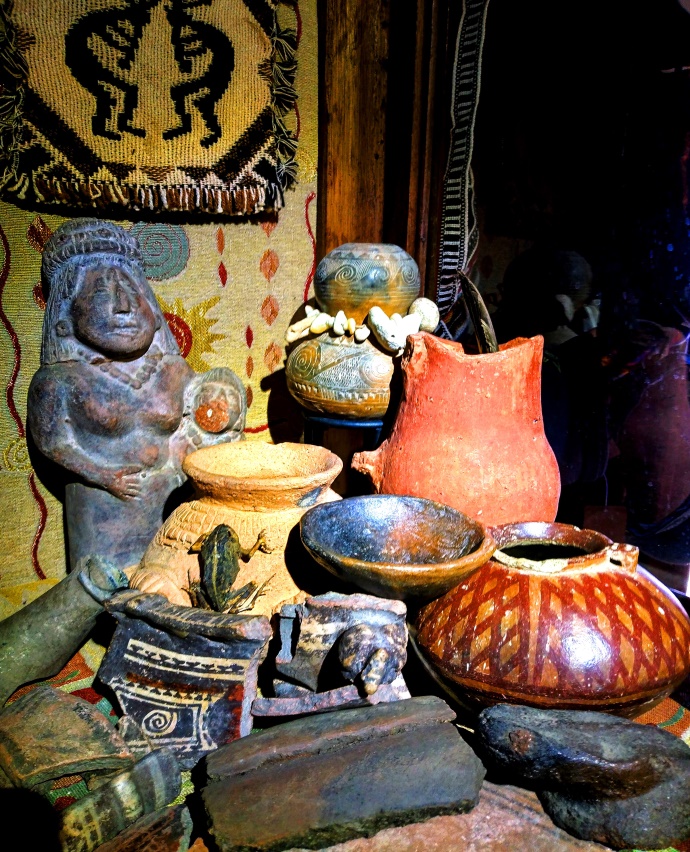




Etnia Nativa:Yourpeek into Nativemagic, healing the spirit.
Article by Etnia Nativa call us 592 2702 and book your experience!
Long before modern Aruba took shape, the island’s rocks, water, soils, and vegetation were already shaping the lives, traditions, and settlements of its Indigenous inhabitants.
Each week, in this cultural space, Etnia Nativa—one of Aruba’s leading guardians of the island’s cultural heritage—invites readers to journey through the history, identity, and living traditions that have shaped the Aruban spirit across generations.
In this latest edition, Etnia Nativa explores how this ancient relationship between people and place comes to life through Aruba’s distinctive geology. Across Santa Cruz, Tanki Flip, Noord, Alto Vista, and Savaneta, landscapes shaped largely by quartz diorite created a rugged terrain of rocky outcrops, dry riverbeds, and deep rainwater gutters known as rooi (rôôy). Yet these seemingly harsh landscapes also offered valuable resources. Since quartz diorite is relatively impermeable, where water was retained in the soils above the rock, creating pockets of fertile land where vegetation and crops could flourish.
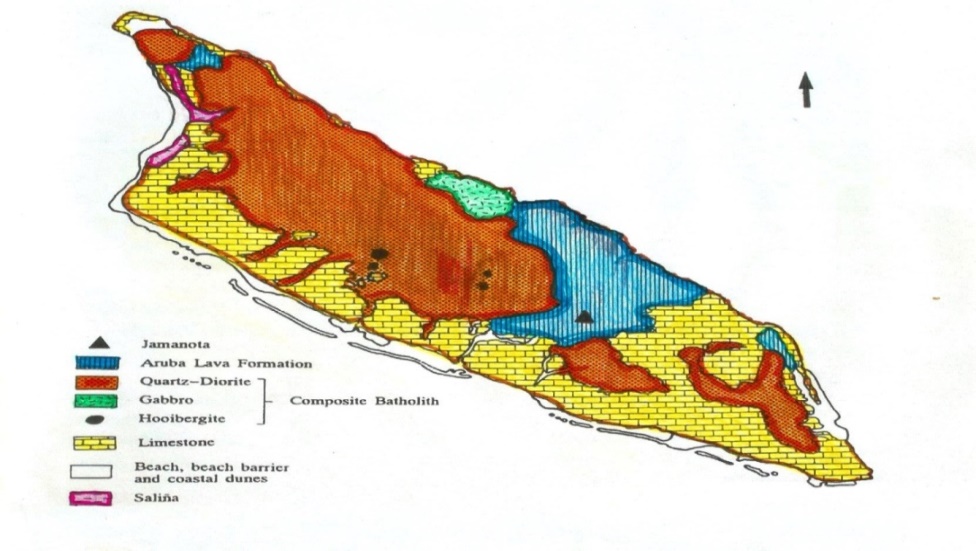
For our Aruban Indigenous inhabitants, these geological features were far more than elements of the landscape. They formed part of a living environment that influenced where people settled, how they cultivated the land, and how they adapted to the island’s distinctive natural conditions.
Yet perhaps nowhere is Aruba’s geological identity more striking than at Hooiberg—the island’s iconic volcanic cone rising from its centerup to 166 meters above sea level, Hooiberg stands boldly above the surrounding landscape—a timeless monument to the forces of the Earth. Its distinctive form is composed primarily of hooibergite, a rare rock named to the hill, closely associated with Aruba and this geological region.
Hooibergite, together with other ancient rocks such as gabbro found in Aruba’s northern hills, forms part of Aruba’s ancient batholithic landscape, referred to as the Aruba Lava Formation. Weathering and erosion over millions of years gradually sculpted the immense geological foundation into the hills, valleys, boulder formations, and waterways that shaped the island we know today.
This ancient rocky landscape also shaped the lives of the Indigenous people, who learned to live in harmony with the island and its geological environment. For them, the landscape was more than just geology. They lived closely connected to the Earth and learned to read its signs and understand how to use the land. Through knowledge, observation, and experience, they knew where to live, where to plant, and where to fish. This was their main technology when it came to survival and living sustainably. They thrived by being one with their environment. Their settlements show how carefully they read the land—and how the land, in turn, provided what they needed.
Perhaps the most extraordinary connection between Aruba’s ancient inhabitants and the quartz diorite landscape is found in the island’s rock art.
Pictographs and petroglyphs—painted and carved images left on stone—are frequently found on quartz diorite boulders. Many of these sites make use of natural cavities on the sheltered, leeward sides of rocks.
These cavities were themselves created by the slow chemical weathering of the stone over immense stretches of time.Here, geology and human expression meet.
A natural opening in a boulder became a place for images. A rock became a canvas. The landscape became a setting for cultural and spiritual expression.
Of Aruba’s seventeen known rock art sites, twelve are located within the quartz diorite landscape.
That concentration is difficult to ignore.
It suggests that these areas were significant not only as places to live and cultivate food, but also as places where knowledge, ceremony, creativity could be expressed but also where the spirits were traditionally presents
The stones, in a very literal sense, became part of Aruba’s cultural memory.
Rediscovering the Soul of Aruba
Today, it is easy to travel across Aruba and admire the scenery of hills on the horizon, dry riverbeds, a weathered boulder, a few patches of fertile soil and the rest covered by xenophiles and cactus. However, look more closely, and the landscape begins to tell another its story.
The rooi`s speak of ancient waters. The beaches of an abundant sea
The soil speaks of agriculture. Of corn beans squashes and yuca
The rocks speak of geology.Beautiful clay pottery and green stones
The archaeological sites speak of settlement and our ancestors.
In addition, the petroglyphs and pictographs speak of a people whose relationship with this island extended beyond survival into culture, identity and spirituality.
Together, these elements reveal an Aruba that existed long before colonial influence—a living landscape shaped by nature and given meaning by generations of indigenous inhabitants.
This is the perspective that Etnia Nativa encourages visitors to explore—not simply an Aruba to see, but an Aruba to understand. It is an opportunity to pause, connect with the land, and consider the stories rooted in it.
These stories offer another way to experience the island, bringing together its geology, archaeology, heritage, and living cultural memory. Understanding a place goes beyond what can be seen; it also means paying attention to the land beneath our feet and the history it carries.Book your visit today:WhatsApp+297 592 2702 etnianativa03@gmail.com