




Etnia Nativa:Your peek into Native magic, healing the spirit.
Article by Etnia Nativa call us 592 2702 and book your experience!
Through its cultural column, Island Insight, Etnia Nativa invites readers to discover Aruba from aperspective through a different perescope exploring and discover the island’s rich intangible cultural heritage—historical traditions, knowledge, and practices passed down from generation to generation. In this episode, we begin the story of Aruba’s air connections to the out side world and recaunts how the island’s trail from a modest mud track led to its connection with the world air traffic of today.
Before the roar of modern jet engines became part of Aruba’s daily soundscape, and before thousands of visitors passed through Queen Beatrix International Airport each day, air travel on the island began with something far more modest: a rough stretch of ground, small aircrafts, and a vision that Aruba could be connected to the outside world by air.
Today, it is easy to take Aruba’s international air connections for granted. Aircraft arrive from North America, Latin America, the Caribbean, and Europe, carrying tourists, business travelers, families, and residents. But Aruba’s aviation story began nearly a century ago, when the idea of an airport was still a bold proposition.
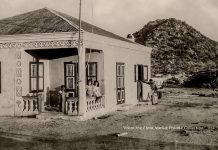
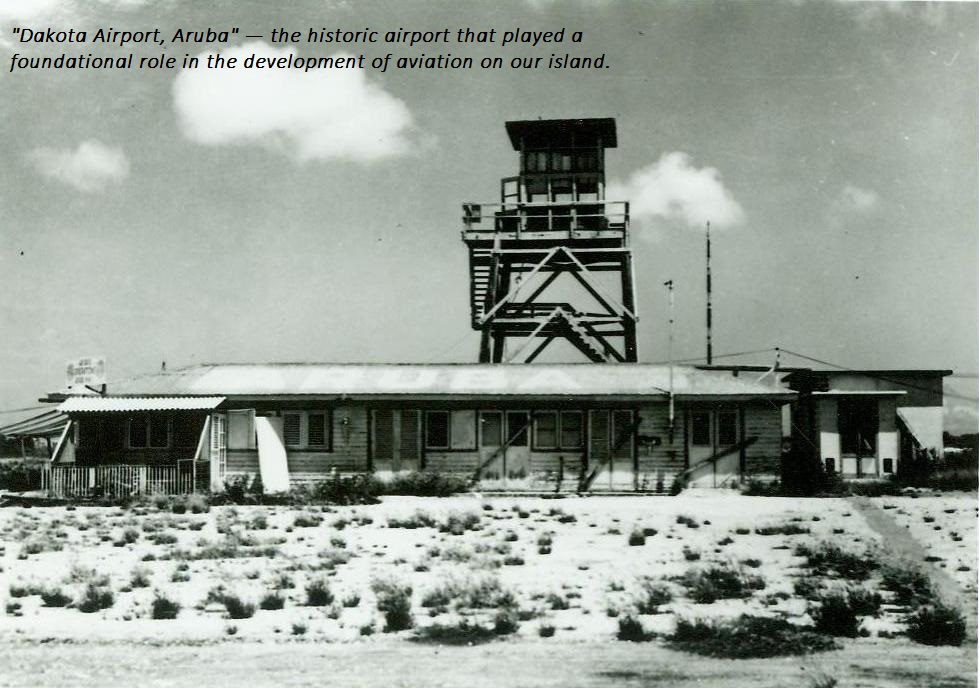
In the early 1930s, Lieutenant Governor Wagemaker recognized the importance of establishing an airfield on Aruba. Plans were developed for an airport in the Dakota area, on government land that had previously been used for aloe cultivation. Older maps identify the area as Baca Morto, a name that translates roughly as “dead cow.”
What followed would change Aruba forever.
In 1934, businessman Manuel Viana and the Caribbean Flying Service launched a weekly air service between Aruba and Curaçao. The aircraft carried both passengers and mail, linking the island by air at a time when aviation was still in its infancy.
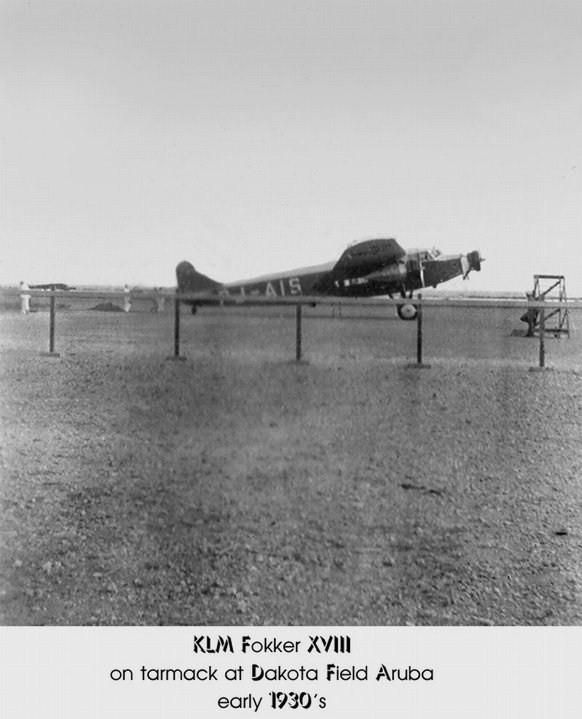
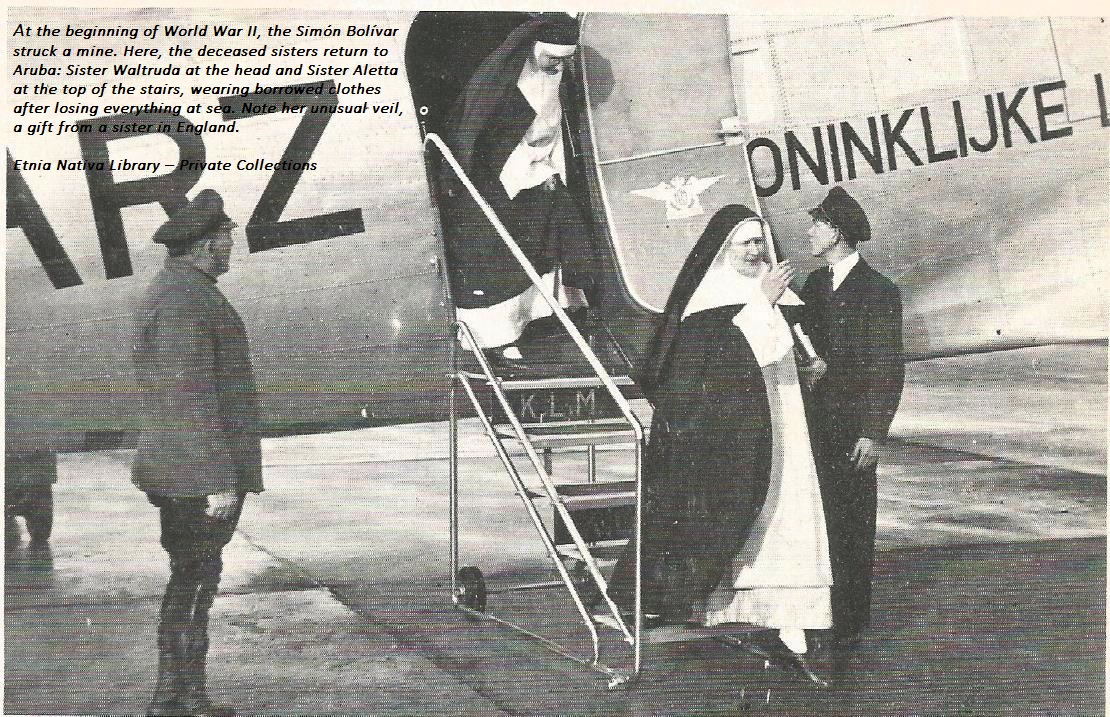
Then came a name that would become deeply intertwined with Aruba’s aviation history: KLM.
On December 24, 1934, KLM’s famous Fokker F.XVIII Snip landed in Aruba. The aircraft had already made aviation history with its pioneering transatlantic journey from Amsterdam to the Caribbean. Its arrival marked the beginning of a new chapter in the island’s aviation history.
Regular KLM service between Aruba and Curaçao began in January 1935. The airline later moved from the primitive mudflat landing area to a graded runway called KLM Field, at the site that would become associated with Dakota Airport.For a small Caribbean island, this marked the beginning of a new connection with the world.In 1937, an air-traffic radio station was established, along with the island’s first passenger-handling building, reflecting aviation’s rapid growth in Aruban life.
But history soon gave the airport a far more serious role.
When the Second World War reached the Caribbean, German U-boats threatened shipping routes and attacked regional oil supply tankers. Aruba’s strategic importance grew because of its large oil industry stationed near vital Caribbean shipping lanes.
In 1942, the United States Army Air Forces began using the airfield to defend Caribbean shipping and the Panama Canal against German submarines. The island population contributed and the government bought two war planes and constructed a 5,100-foot airstrip and the facilities, while the installation became known as Dakota Airport. The U.S. Sixth Air Force remained until the military presence ended in 1945.
Thus, an airport that began with mail and a handful of passengers became part of the defense of the Western Hemisphere.
After the war, aviation returned to civilian use, but the airport was no longer simply a landing field.
A new terminal opened on March 18, 1950. Major runway and taxiway improvements followed in the early 1950s. By 1954, a new 6,445-foot lighted runway and parallel taxiway had significantly improved the airport’s capabilities.
Then came a royal connection.On October 22, 1955, Dakota Airport was officially dedicated to Princess Beatrix of the Netherlands during a royal visit. Prince Bernhard conducted the opening ceremony. When Beatrix became Queen of the Netherlands in 1980, the airport’s name evolved into the Queen Beatrix International Airport as known today.
The name change symbolized something much larger: Aruba itself was changing.
Part II of our look at Aruba’s air connections is coming in our next weekly post. Stay tune!
Don’t just visit Aruba—discover its soul. Journey into the island’s ancestral heritage with Etnia Nativa and experience the stories, culture, and spirit that make Aruba truly unique
Book your visit today:WhatsApp+297 592 2702 etnianativa03@gmail.com