




(Oranjestad)—The history of how Aruba achieved its Status Aparte is one that witnessed many changes, impasses, polarization, and the continuous efforts of several political figures on the island. We cannot cover everything on this page, but we can recall some of the decisive moments that shaped the path for Aruba to reach its autonomy.
The first call for autonomy
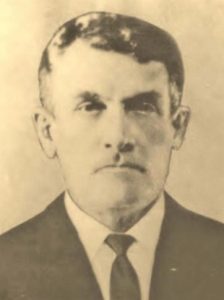
It is important to note that the calls during the 40 years of our struggle for autonomy always came in response to developments on our island, whether positive or negative. The first call came from Jan Hendrik Albert Eman (Henny Sr.) during the years around 1948.
At that time Curaçao was the central government where all decisions for the islands of the Netherlands Antilles were made. During this period Aruba experienced high unemployment—forcing many citizens to look for work on other islands in the Caribbean—and high child mortality.
When Henny Sr. became a member of the Landraad (nation’s council), the situation improved. LAGO and the refinery in Eagle established themselves and many jobs became available. Aruba was generating more revenue but did not have the autonomy to manage it. This is where the first call for autonomy was born.
Although Henny Sr. was certainly not the only voice that played a role during the years around 1948, his focus and continuous efforts during this period earned him the title of “The Founder.”
It was on March 18, 1948 that Aruba received support at the Round Table Conference, marking an immortal date in the struggle for Status Aparte. However, the struggle soon stalled after the Netherlands formed a new cabinet following the Second World War.
Although Queen Wilhelmina had promised that the islands in the Antilles would receive autonomy after the war, the new cabinet introduced drastic changes in the relationships between the Netherlands and its colonies. The changes were mainly directed at addressing the relationship between the Netherlands and Indonesia, but the consequences were also significant for the Antilles and Suriname. The new Dutch cabinet canceled important legislation (ontwerp-Grondswet) that had been based on the resolutions made during the Round Table Conference. This was a heavy blow for Aruba.
During the 1950s and 1960s the struggle quieted considerably, as Aruba’s economic situation was suffering.
Betico leads the fight to the end
During the 1970s, the struggle for autonomy was renewed. The call for independence returned to the agenda after an incident in Curaçao where the Netherlands had to deploy the army to restore public order. This led Dutch politicians to believe that the Netherlands could no longer continue carrying the responsibility and should grant independence to the Antilles and Suriname as soon as possible.
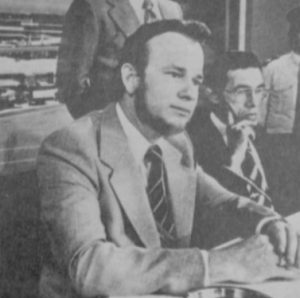
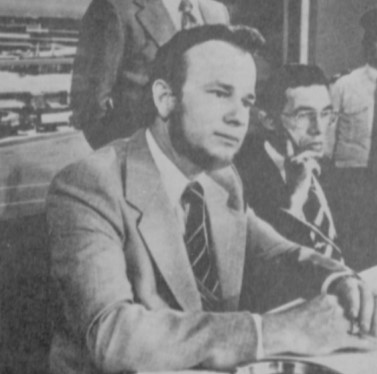
In 1971, Betico Croes and his party MEP became key figures in matters of constitutional relations. In 1972, consensus was reached in Aruba regarding constitutional relations after MEP, AVP, and PPA rejected joining an Antillean federation that would have placed Aruba in an inferior position compared to Curaçao.
In 1982, a decisive moment was reached in the path toward Status Aparte, when—at the insistence of AVP—an agreement was signed for a national central government.
In 1983, approval was given to amend the statute to grant Aruba Status Aparte, which the Netherlands and MEP had set conditions on. MEP agreed that Status Aparte would take effect on January 1, 1986.
At the same time, Betico Croes still had the goal of achieving independence, but since he had signed for Status Aparte, he stepped back and allowed the people to decide whether to maintain it or continue the struggle for independence. In a referendum, the people voted to maintain Status Aparte.
“It was truly a struggle with sweat, blood and tears”
Without Betico’s help, the struggle might have ended during the 1970s. Through his continuous efforts, Betico instilled patriotic love in the Aruban people. It was Betico who introduced our national symbols: the flag and the anthem.
Unfortunately, the leader of MEP did not live to see the fruits of his work. Just before the implementation of Status Aparte, Betico Croes suffered a serious accident. In November 1986, he passed away. To this day, Betico Croes is commemorated every year as our Liberator.