



Etnia Nativa: Your peek into Native magic, healing the spirit.
Article by Etnia Nativa call us 592 2702 and book your experience!
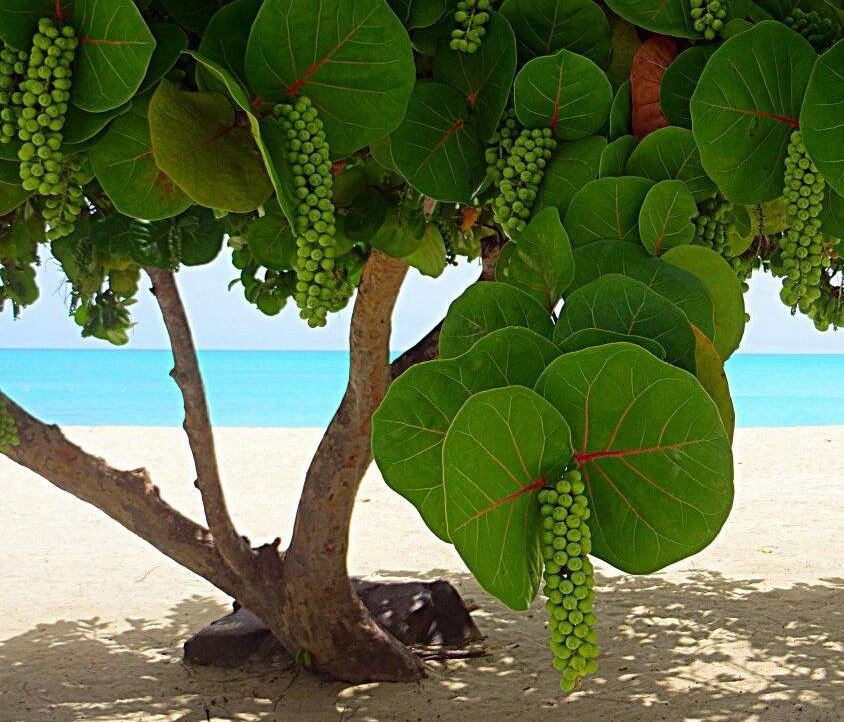
Through this cultural space, Etnia Nativa invites readers to explore Aruba’s intangible cultural heritage: the traditions, knowledge, and stories passed down from generation to generation. In this episode, we turn our attention to a remarkable survivor of our changing coastline: the sea grape (Coccoloba uvifera), locally known as Druif di Lama—a tree of profound ecological, historical, and cultural value to Aruba.
A Tree Rooted in Our History
There was a time when sea grape trees were abundant along Aruba’s beaches and near its bocas (sea inlets). They provided shade, sheltered coastal wildlife, helped stabilize the soil, and contributed to the distinctive character of our shoreline. Aruba’s Indigenous ancestors valued their fruit, while their exceptionally strong and durable wood served an important purpose in traditional boatbuilding.
Aruban artisans recognized the strength of this wood and used it to make boat keels—the essential backbone running along the bottom of a vessel’s hull, contributing to its stability, balance, and directional control. This traditional practice reflects the resourcefulness of our ancestors and their intimate understanding of the natural materials available on the island.
Belonging to the Polygonaceae family, the sea grape grows naturally along tropical coastlines throughout the Caribbean and the Americas, from Florida to Brazil. Its remarkable ability to withstand harsh coastal conditions makes it particularly suited to Aruba’s environment.
A Changing Coastline
Today, the Druif di Lama is far less common along many parts of Aruba’s coast. Extensive construction and coastal development have transformed the landscapes where these trees once flourished. Although scattered specimens remain along certain beaches, and protected natural areas, their diminished presence reminds us of what can be lost when natural vegetation gives way to development.
The disappearance of these trees represents more than a botanical loss. It signifies a changing landscape and the gradual weakening of a living connection to Aruba’s past.
Despite these changes, the sea grape remains an excellent choice for suitable gardens, particularly in locations exposed to strong winds and salty sea air. Once established, it tolerates drought well and generally requires relatively little maintenance. Although salt-laden winds may scorch some leaves, the tree is remarkably resilient.
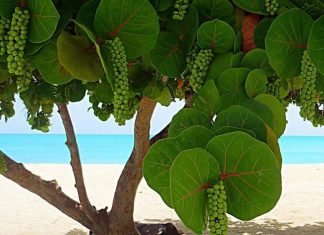
Under favorable conditions, it can grow up to approximately 15 meters tall, developing a short trunk, broad canopy, and spreading branches that provide generous shade. Its large, thick, leathery leaves may reach 25 centimeters across, displaying shades of green before turning yellow, orange, or red as they age.
Small, creamy-white flowers grow in long clusters at the branch tips, eventually producing the tree’s distinctive grape-like fruits. As they ripen, these fruits may turn reddish-purple, although some remain green. Because individual fruits mature at different times, harvesting them often requires patience and careful selection.
Beneath their thin skin, sea grapes contain juicy pulp with a pleasant balance of sweetness and acidity. Although each fruit has a relatively large, hard seed, the pulp can be enjoyed fresh or transformed into compotes, jams, jellies, juices, and, in some Caribbean communities, fruit wine.
These culinary traditions reflect the knowledge and creativity through which generations have made use of the natural resources around them.
Preserving a Living Heritage
The story of the Druif di Lama is ultimately about more than a tree. It connects Aruba’s natural environment with Indigenous heritage, traditional boatbuilding, local food practices, and the coastal landscapes remembered by earlier generations.
Protecting existing sea grape trees and planting suitable native coastal vegetation in appropriate locations can help preserve our island’s natural character, stabilize vulnerable soils, and provide shade for future generations.
The Druif di Lama has endured Aruba’s winds, salt, and demanding coastal conditions. Yet its future also depends on the choices we make today.
The next time you encounter a sea grape on a beach, near a boca, or in an Aruban garden, take a moment to appreciate it. You are looking at more than a tree: you are witnessing a survivor of a changing coastline, a keeper of ancestral knowledge, and a living reminder of the natural and cultural heritage we still have the opportunity—and responsibility—to protect.
By preserving the Druif di Lama, we preserve a part of Aruba’s story.
For those who seek more than a destination, who believe the richest journeys are measured not in photographs taken but in connections made, Etnia Nativa opens the door to the authentic soul of Aruba.
Beyond the beaches and beyond the familiar, discover the stories, traditions, people, and living heritage that make this island truly unique. Come with an open heart and a curious mind. Leave with more than memories—leave with a deeper connection to Aruba and a story of your own to tell. Discover Etnia Nativa. WhatsApp +297 592 2702 etnianativa03@gmail.com