




Through its cultural column Island Insight, Etnia Nativa brings Aruba’s heritage to life—sharing the traditions, knowledge, and stories passed down through generations.
Etnia Nativa: Your peek into Native magic, healing the spirit.
Article by Etnia Nativa call us 592 2702 and book your experience!
A goat on a rocky hillside or a donkey roaming Aruba’s cactus-studded landscape may seem like an ordinary island sight. However, these animals carry a much deeper story of colonization, survival, transport, agriculture, trade, and adaptation.
More than symbols of the countryside, Aruba’s goats and donkeys are living connections to the island’s past. Introduced during the colonial era, they arrived with the Spanish through trade and settlement. Well adapted to the island’s dry, rugged, and rocky terrain, goats and donkeys became an enduring part of Aruba’s landscape and rural heritage.
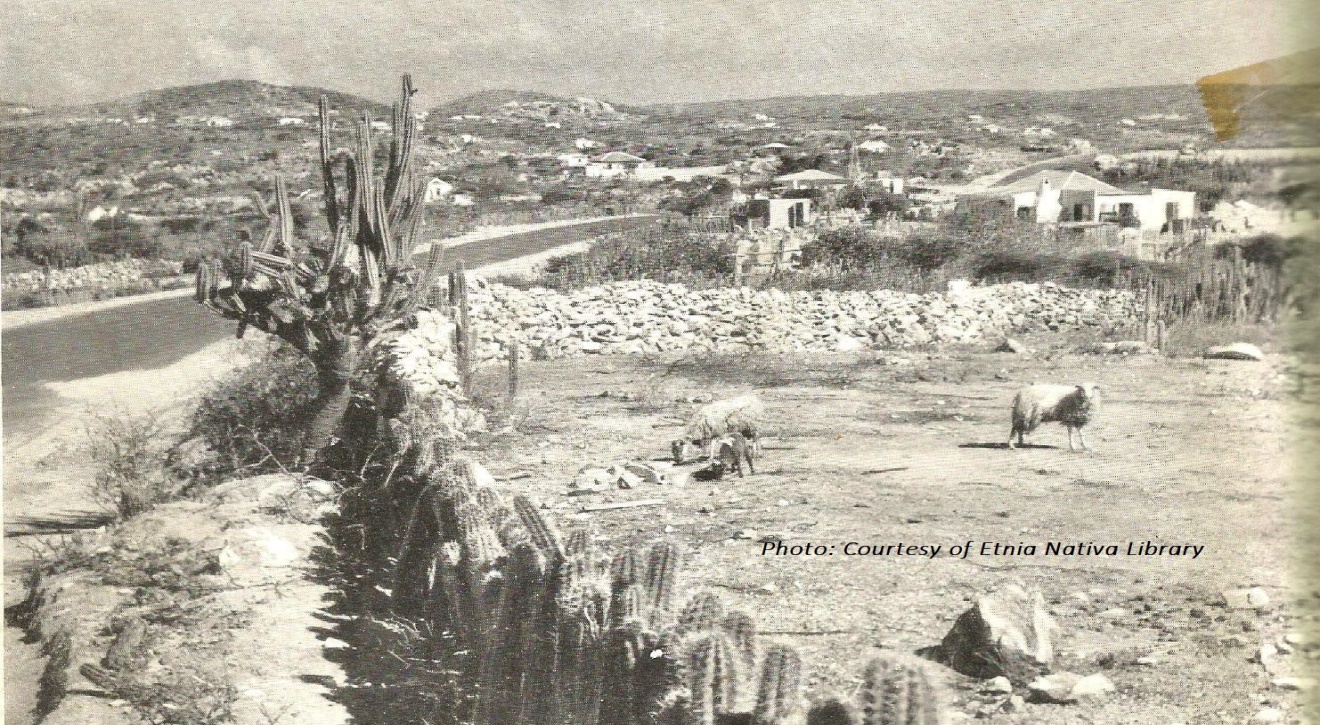
The goat is among humanity’s oldest domesticated animals and has been an important companion to humans for thousands of years. Goats became essential to communities around the world, providing milk, meat, leather, skins, fur, and manure. Goat milk could also be transformed into cheese, while young, milk-fed goats became known by the Spanish word cabrito. Closely related to sheep, goats belong to the family Bovidae.
When goats arrived in Aruba, they encountered an unforgiving environment—but one in which their natural resilience gave them a distinct advantage.
Aruba’s rocky hills, thorny vegetation, and dry scrubland can be challenging for many species. Goats, however, seem almost perfectly suited to the environment.
Agile and resourceful, they climb steep slopes, feed on thorny bushes, cactus and undergrowth, and can even be seen resting among the branches of watapana trees. Their resilience has allowed them to embed deeply in Aruba’s rural identity.
However, their relationship with the island’s environment is complex. Goats can contribute to deforestation and erosion by consuming young vegetation that emerges after the rainy season. They are therefore both survivors of Aruba’s harsh landscape and, at times, contributors to its degradation and desertification.
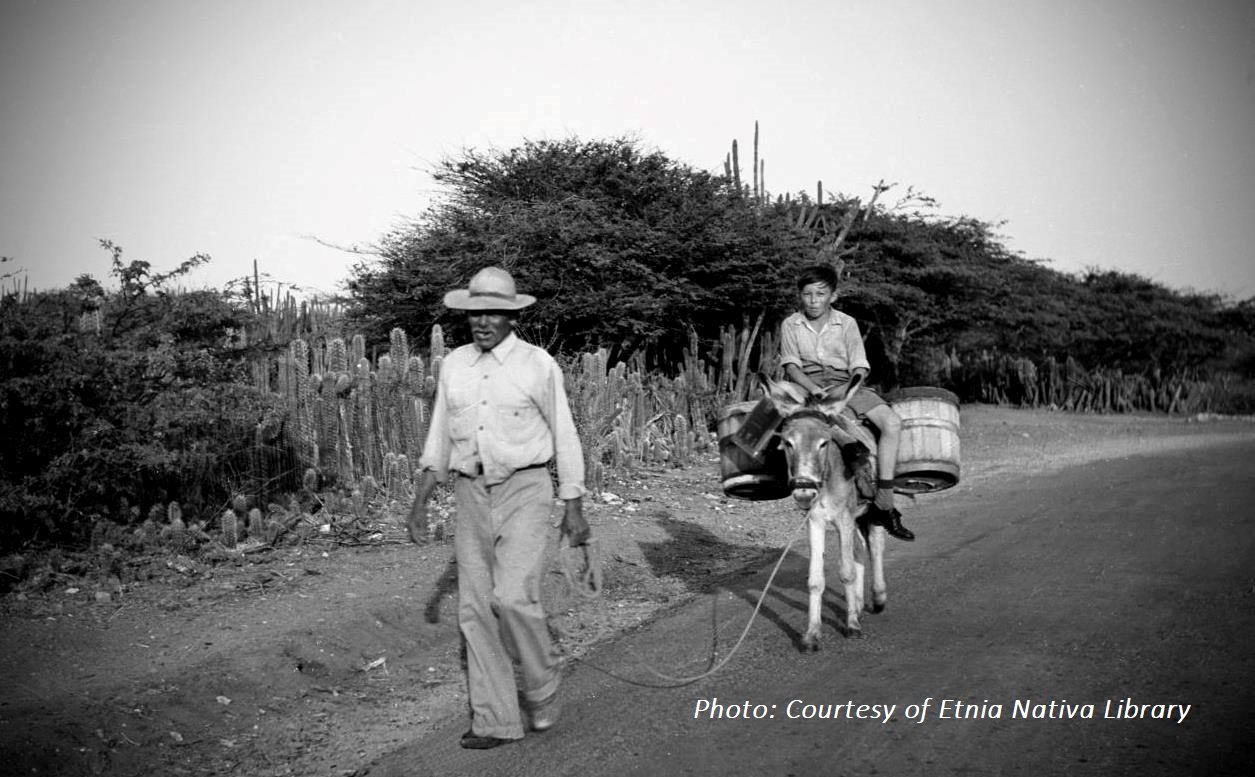
Historical accounts reveal how closely livestock was entrenched to the struggle for survival on an island that has lost its connection to an ecological coexistence. Among these animals were donkeys—quiet, patient, and remarkably durable creatures that became an enduring part of Aruba’s colonial history. Hot to arid regions, they were naturally suited to an island environment where fresh water was once scarce.
Their metabolism enabled them to survive difficult conditions, including long periods with limited access to water. Their endurance made them valuable to early Aruban communities.
Donkeys were ways for transportation, agriculture, and trade, while their manure provided a valuable agricultural resource. At times when money was scarce, the animals themselves could represent wealth and could be exchange as valuable possessions.
Their importance therefore extended beyond their practical uses. Donkeys became part of the social and economic fabric of rural Aruba.
Even today, semi-wild donkeys can be seen roaming the island. They are sometimes mistaken for abandoned or stray animals, but their presence represents generations of animals that have lived freely in Aruba’s countryside.
The story of Aruba’s goats and donkeys is ultimately a story about people.
These animals arrived through a colonial system, but over generations they became part of something uniquely Aruban. They adapted to the island, became part of rural life, and played a role in the survival and livelihoods of generations of inhabitants.
That is why preserving their story matters.
Etnia Nativa’s approach to heritage encourages us to look beyond monuments, artifacts, and written records and recognize that heritage can walk, graze, and breathe.
A goat standing on a rocky ledge is connected to thousands of years of domestication and human history. A donkey crossing an Aruban road carries a legacy that reaches back to the island’s colonial period.
As explored in Etnia Nativa’s Episode 187, “Our Cabrito,” and Episode 255, “Donkeys—Their Arrival on Aruba,” these animals offer another way of understanding Aruba’s past.
What if Aruba’s history is walking right beside you?
A goat stands on a rocky hillside, while a donkey crosses a cactus-filled landscape. These are not just everyday sights—they are living reminders of Aruba’s heritage.
At Etnia Nativa, we invite you to experience an Aruba beyond the beaches. Discover how geology, archaeology, culture, and living traditions connect to the land beneath your feet. Because Aruba is not just a place to see. It is a place to understand.
Book your visit today: WhatsApp +297 592 2702 etnianativa03@gmail.com