

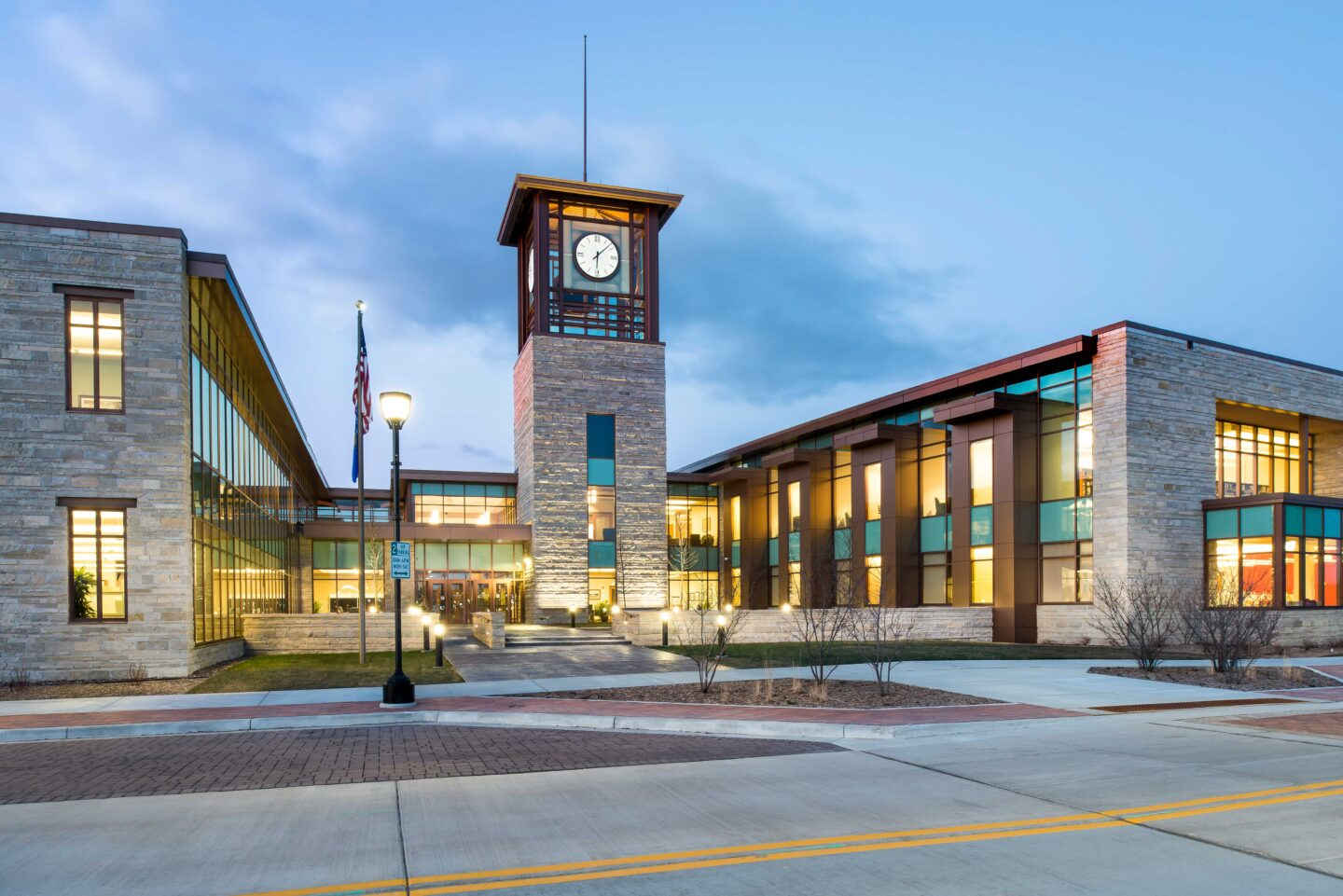




OAK CREEK, WISCONSIN — In the heart of Oak Creek, a town where the winter winds usually bite harder than the local news, something remarkable has taken root. It didn’t involve a grand municipal project, a corporate takeover, or a multi-million dollar donation. Instead, the transformation of this community began with a single, handwritten note tucked inside a well-worn, library-bound copy of A Tree Grows in Brooklyn.
The note, written on a simple piece of yellow legal pad paper, was discovered by a high school junior named Leo during a late-night study session. It read: “This book kept me company when I felt like the world had forgotten I existed. If you’re holding this, know that you aren’t alone either. Pass it on.”
What started as a solitary, anonymous gesture of kindness has snowballed into what locals are now calling “The Oak Creek Book Chain.” Within months, the Oak Creek Public Library has evolved from a quiet repository of books into the beating heart of a grassroots movement that is fundamentally altering the town’s social fabric.
Library director Sarah Jenkins, who has managed the branch for nearly twenty years, says she has never seen anything like it. “Initially, we thought it was a fluke—a one-off ‘Post-it’ note left by a sentimental reader,” Jenkins explained, gesturing toward a now-overflowing display near the entrance titled The Hope Shelf. “But then it happened again. And again. By the third week, books were being returned not just with notes, but with pressed flowers, handmade bookmarks, and even five-dollar gift cards for the local coffee shop tucked into the back covers.”
The “Hope Shelf” operates on a simple, self-sustaining logic: take a book that speaks to you, read the message left by the previous borrower, and when you return it, add your own piece of encouragement for the next stranger. It has turned the act of reading—traditionally a solitary endeavor—into a silent, town-wide conversation.
The movement has provided a vital lifeline for the town’s most vulnerable populations, particularly its senior citizens. Oak Creek, like many Midwestern towns, has seen its younger generation migrate toward larger cities, leaving behind an aging population that often struggles with isolation.
Martha Higgins, an 82-year-old widow who has lived in the same bungalow on 5th Avenue for five decades, says the library has become her primary social outlet. “I found a note in a mystery novel three weeks ago from a young man who said the story helped him get through a particularly grueling week of midterms,” Martha said, her eyes twinkling. “I wrote back to him on the same slip of paper, telling him that at my age, every week feels like a midterm, but we keep going anyway. We’ve been ‘pen pals’ through that one book for a month now. I don’t know his face, but I know his heart. It makes the world feel a little less empty when I turn off my lamp at night.”
The ripple effect has extended far beyond the library’s brick-and-mortar walls. Across the street, “The Perk Up,” a small family-owned coffee shop, has seen a 50% increase in its “suspended coffee” program—a system where customers prepay for a drink for someone who might be struggling.
Owner Mike Russo attributes the surge in generosity directly to the library’s influence. “People come in here after browsing the stacks, and they’re just… softer. They’re more patient in line. They’re looking for ways to pay it forward,” Russo noted. “I had a customer last Tuesday who paid for the next ten people behind him just because he’d found a particularly moving poem in a book across the street. Kindness is a muscle; the more this town exercises it, the stronger it gets.”
The movement has even caught the attention of local law enforcement. While Oak Creek has always been a relatively safe community, local police chief David Miller notes a subtle shift in the “temperature” of the town. “We’re seeing fewer disputes between neighbors and a general increase in community cooperation,” Miller said. “It turns out it’s a lot harder to be angry at your neighbor when you realize you might be sharing the same favorite book.”
As news of the “Book Chain” spreads on social media, Jenkins has received calls from library directors as far away as Oregon and Maine, all looking to replicate the Oak Creek model. However, Jenkins insists that the success of the program isn’t about a specific marketing strategy or a clever display.
“It’s about the vulnerability,” she says. “In a world that is increasingly digital and often very polarized, people are hungry for something real. A handwritten note is a physical bridge between two people. We didn’t build this; the people of Oak Creek built it. They just used our books as the foundation.”
As the first snow of the season begins to dust the streets outside, the library is busier than ever. Inside, the hushed silence isn’t the cold, stifling quiet of an institution, but the warm, expectant silence of a community waiting to see what the next chapter holds.
The Oak Creek Book Chain proves that you don’t need a massive budget to rebuild a community. Sometimes, all you need is a library card, a pen, and the courage to tell a stranger that they aren’t alone.