

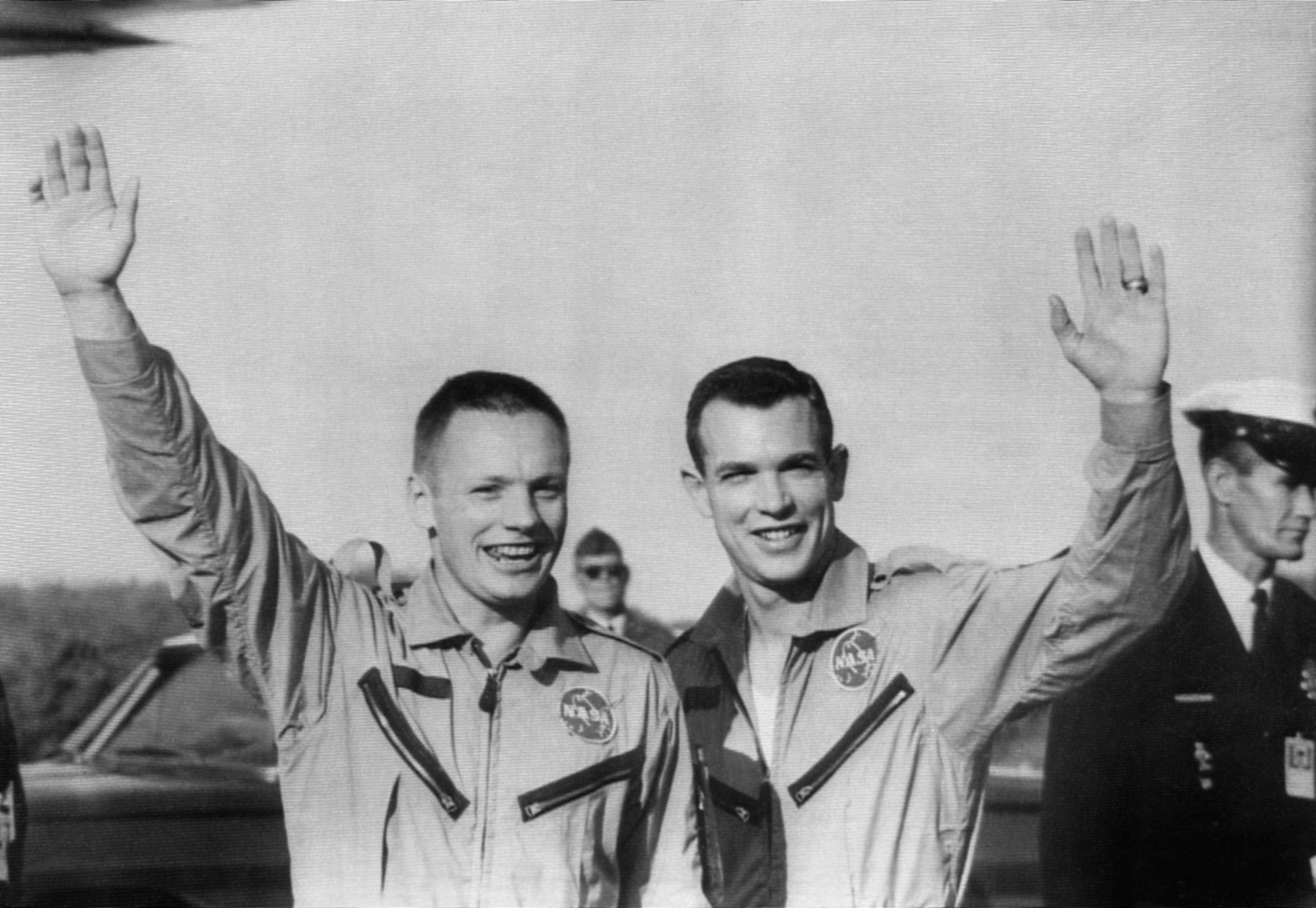




WAPAKONETA, Ohio — More than sixty years after he narrowly escaped a catastrophic failure in Earth’s orbit, a collection of never-before-seen photographs of Neil Armstrong has emerged, offering a raw, unvarnished look at the man who would eventually become the first person to walk on the Moon.
The images, recently given to the Armstrong Air and Space Museum in Armstrong’s hometown, show the aftermath of the Gemini 8 mission in 1966. While the world remembers the Apollo 11 mission in 1969 as his greatest achievement, these “lost” snapshots remind historians of the near-fatal event that almost ended his career—and his life—before he reached the lunar surface.
A Mission in Crisis
In March 1966, Armstrong and fellow astronaut David Scott completed the first successful docking of two spacecraft. However, the triumph turned to crisis when a stuck thruster caused their capsule to spin out of control. Armstrong’s “quick thinking” helped him regain control and make an emergency landing in the Pacific Ocean, off the coast of Okinawa, Japan.
Because the landing was unplanned and far from the main recovery area, there was little media presence. The newly discovered photos were taken by Ron McQueeney, an Army veteran and professional photographer who was part of the recovery team.
Dante Centuori, executive director of the Armstrong Air and Space Museum, said that “Sometimes, an incredible event can actually be documented by some of the most ordinary means”.
The Man Behind the Image
The McQueeney collection provides a rare look at Armstrong’s behavior after a near-death experience. One photo shows an exhausted Armstrong stepping onto a recovery ship. His face shows both relief and the quiet focus he was known for.
These images add to a growing collection of personal archives that have appeared in recent years. In 2018, the Armstrong-Engel Family Gallery shared personal family photos—many taken by his mother, Viola Armstrong—showing the astronaut in everyday moments from 1955 to the late 1960s. Unlike the official NASA photos of the time, these collections show the “real Neil”: a test pilot, a father, and a man who was famously modest about his world-changing accomplishments.
The Value of “Lost” History
The discovery of these photos shows a larger trend in 2025 and 2026. Historical archives are being updated by private donations and digital restoration. From unseen shots of World War II combat to snapshots of Old Dubai before its modernization, the “found photo” helps to correct and humanize the historical record.
For the Armstrong Air and Space Museum, the new Gemini 8 photos are more than just keepsakes. They show the skill that made the Moon landing possible. Museum officials noted that the photos capture the “heroic return” of a man who had just saved a multi-million dollar mission and two lives through his composure under pressure.
A Lasting Legacy
As the 21st century continues, these physical items—film, negatives, and prints—remain the most reliable links to the past. While modern technology like AI is being used to “restore” or even simulate historical events, the authenticity of an original print from 60 years ago is unique.
One art historian noted that “The photographs taken by the Apollo 11 astronauts and the few people who followed them remain unique.” They are “the only portraits of our species on another world”.
The McQueeney photos remind us that before he was a global icon, Armstrong was a pilot who survived a crisis. The Armstrong Air and Space Museum plans to include these images in a permanent exhibit later this year, so that future generations can see the man behind the visor.