



PACIFIC GROVE, CA — In a sun-drenched cottage just blocks from the Monterey Bay, 84-year-old Eleanor Vance sat on her sofa, her hand resting on the silver muzzle of Barnaby, a twelve-year-old Golden Retriever mix. For a decade, they had been a team. But as Eleanor’s health began to decline, a shadow darker than her diagnosis loomed over her: What would happen to Barnaby when she could no longer care for him?
“He’s my heartbeat,” Eleanor said, her voice cracking. “The thought of him ending up in a cold shelter kennel at his age… it was more painful than the illness itself.”
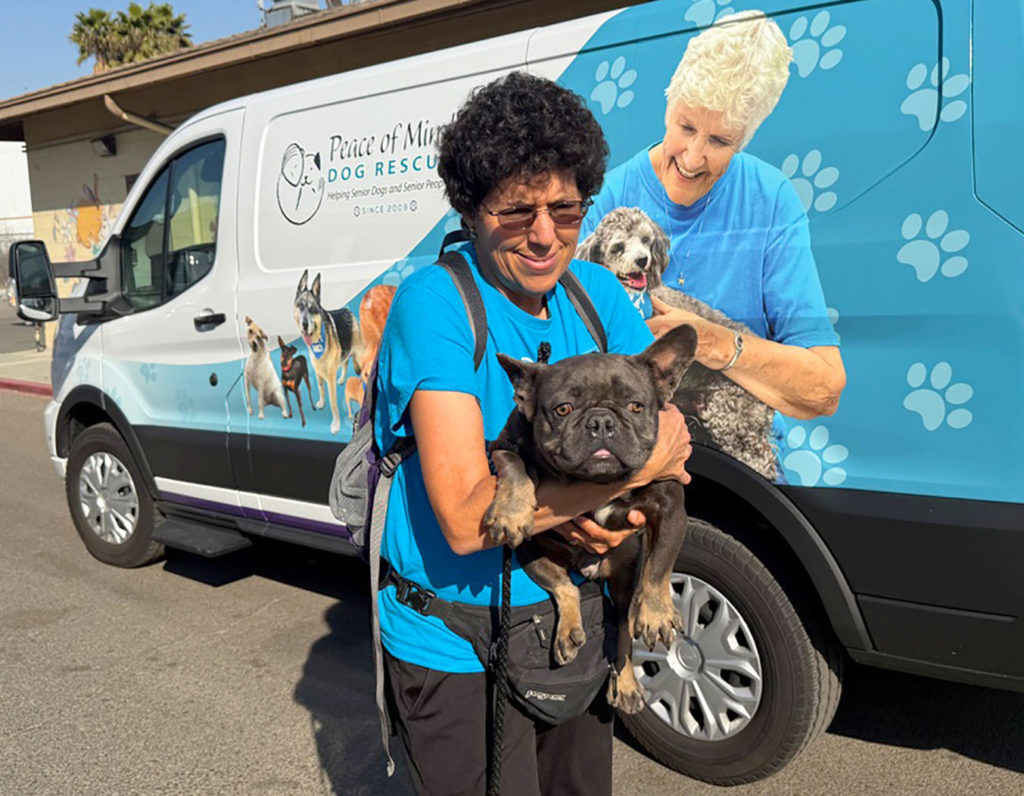
Eleanor’s dilemma is one shared by millions of American seniors. However, thanks to a quiet revolution of kindness led by Peace of Mind Dog Rescue (POMDR), Eleanor and Barnaby found a different ending to their story. This March, the California-based nonprofit hit a historic milestone, having rescued and rehomed over 3,000 “unadoptable” senior dogs and provided permanent “peace of mind” to nearly as many elderly owners.
The Missing Link in Animal Welfare
Founded by Carie Broecker and Monica Rua, Peace of Mind Dog Rescue was born out of a heartbreaking realization. In the traditional rescue world, senior dogs are often the last to be adopted, and seniors facing health crises are often forced to surrender their best friends to municipal shelters where the outcome for older animals is grim.
“We saw a gap in the system that was causing immense suffering for both humans and animals,” says Broecker. “When a senior goes into hospice or assisted living, they aren’t just losing their home; they are losing their primary source of emotional support. We decided that no senior should have to go through that transition wondering if their dog is safe.”
POMDR operates on a dual mission: they rescue senior dogs from shelters who have passed their “adoptable” prime, and they provide a “Perpetual Care” program for seniors who want to ensure their pets are cared for after they pass away or move into care facilities.
A Community Built on Compassion
The organization’s success isn’t just measured in numbers, but in the army of volunteers who make the mission possible. Currently, POMDR utilizes a network of over 1,000 volunteers across the Central Coast. These “Helping Hands” perform tasks that allow seniors to keep their pets longer—walking dogs for those with limited mobility, providing transportation to vet appointments, and even delivering dog food to those on fixed incomes.
For Barnaby and Eleanor, the intervention was life-changing. When Eleanor had to move into an assisted living facility that didn’t allow large dogs, POMDR didn’t just take Barnaby away. They matched him with a “foster-to-adopt” hero—a retired veteran named Marcus who lived only ten minutes from Eleanor’s new home.
Now, twice a week, Marcus brings Barnaby to the facility for visits. “I didn’t just get a dog,” Marcus said, watching Barnaby rest his head on Eleanor’s lap in the facility’s garden. “I got a new friend in Eleanor, too. We’re a family now.”
The “Senior for Senior” Success
One of the most inspirational aspects of the POMDR model is their “Senior for Senior” adoption program. The initiative encourages older adults to adopt older dogs, recognizing that the energy levels and life stages of both are often perfectly synced.
Medical experts have long touted the benefits of pet ownership for the elderly—lowering blood pressure, reducing loneliness, and providing a sense of purpose. By focusing on the bond between seniors and senior pets, POMDR is effectively tackling two social crises at once: the abandonment of aging animals and the isolation of the elderly population.
A Legacy That Grows
As POMDR looks toward the future, their “Legacy of Kindness” is spreading. Similar organizations are beginning to sprout up across the United States, inspired by the Pacific Grove model. The organization has recently expanded its veterinary clinic to provide low-cost care for senior dogs, ensuring that financial hurdles don’t stand in the way of a dog’s golden years.
“People often ask if this work is sad because we deal with the end of life so often,” Broecker reflects. “But it’s actually the most joyful work imaginable. We get to witness the purest form of love—the bond between a person and their dog—and we get to protect it. There is nothing more rewarding than giving someone peace of mind.”
For Eleanor Vance, that peace is everything. “I can sleep at night now,” she said, smiling as Barnaby wagged his tail. “I know he’s loved. And I know I’m not forgotten, either.”