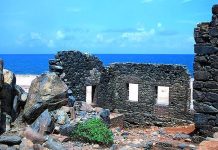

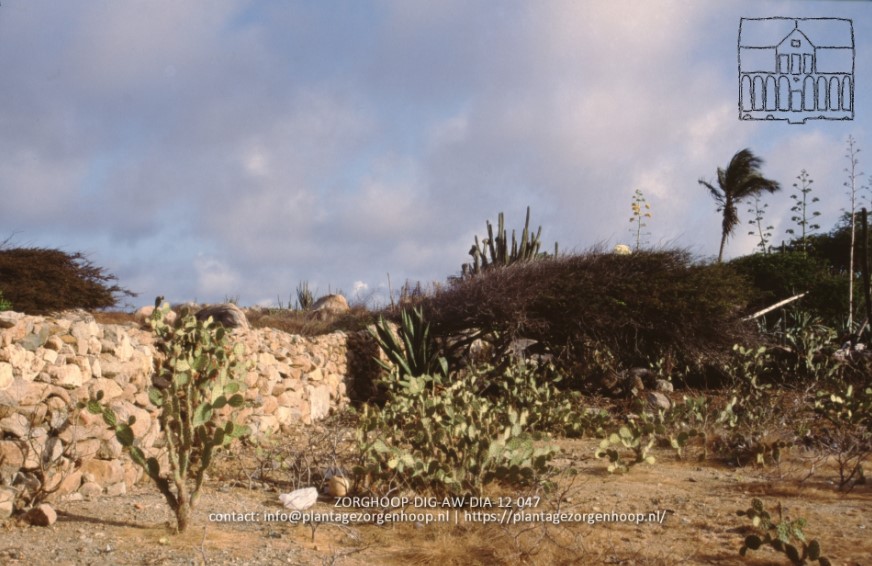




(Oranjestad)—When off-roading, you may encounter some houses that have rock hedges, aligned perfectly and held together by cement—or sometimes nothing at all.
These hedges are called “transhi,” and have a historical and cultural meaning on the island. Used by cunukeros* around the island back when agriculture played a more dominant role in day-to-day life and survival, these stone hedges represent the resilience of our great-grand parents, who had to make do with what nature gave them.
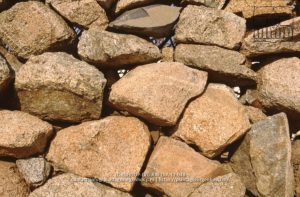
These stone structures are traditionally placed carefully on top of each other. No cement or other binding mixture was used to hold the structure together. Though not commonly used for modern homes, the few structures that remain around the island stood the test of time, some completely intact even after decades of rain, wind and urbanization.
These stone hedges are a representation of the Aruba’s unique farming culture—which valued durability, sustainability and resilience.
*cunukero: Aruban farmers.
Pictures extracted from the ‘Plantage Zorg en Hoop’ collection on Coleccion.aw