



Etnia Nativa: Your peek into Native magic, healing the spirit.
Article by Etnia Nativa call us 592 2702 and book your experience!
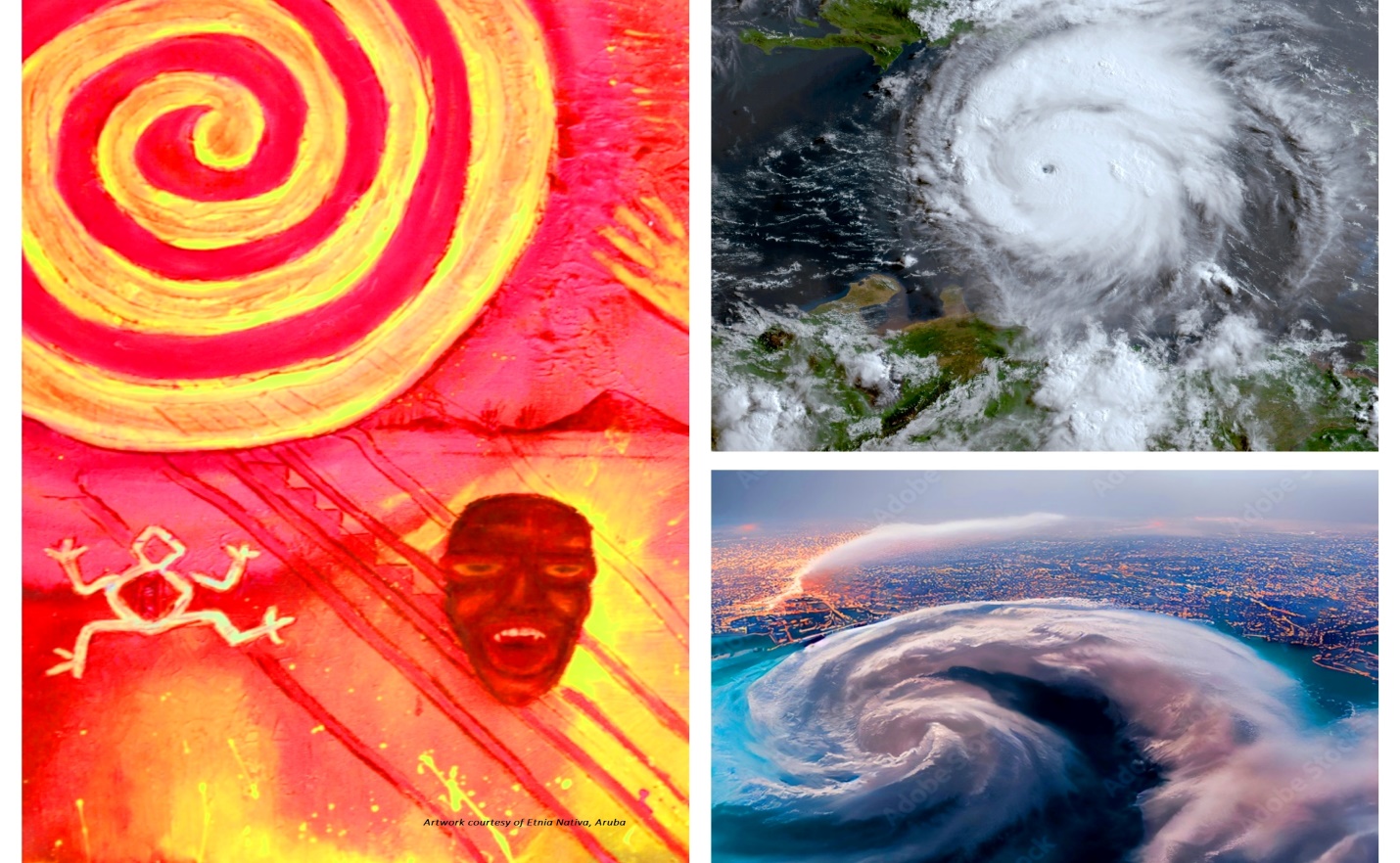
In this new episode, Etnia Nativa shares fascinating memory, myths about the living force that shapes the Caribbean Sea.
As the 2026 hurricane season unfolds, the familiar conversations return across the Caribbean. In Aruba, there is a sense of relative shelter—our geographic position near the South American continent often spares the island from the full force of major storms. Yet the season remains a reminder of nature’s volatility, bringing instead frequent rain showers and thunderstorms that still shape daily life.
Long before meteorological forecasts and satellite tracking, early European sailors entering the Caribbean were unprepared for the region’s violent weather systems. Lacking experience and understanding, many fell victim to shipwrecks in those early years of transatlantic exploration. To them, the Caribbean seas were unpredictable and often hostile, their patterns unlike anything they had known in Europe.
But for the Indigenous peoples of the region, these forces were neither new nor mysterious. They were understood as part of a living natural world—one that demanded respect and interpretation. Across Caribbean cultures, a shared word emerged to describe this immense force: huracan. Among the Caquetío ancestors of Aruba, the term horcan persists in Papiamento today, still meaning hurricane. These communities viewed nature through an animist lens, believing wind, rain, sun, and stars carried spiritual power—forces that could nurture life or destroy it.
Hurricanes, in this worldview, were not random events but powerful beings. Some communities even depicted them as spirals or serpents in motion, capturing both the swirling winds and the calm eye at their center. This imagery reflected an intuitive understanding of the storm’s structure: a rotating system that moves with purpose, sometimes slowly advancing, sometimes lingering, but always reshaping everything in its path.
Even today, hurricanes remain a defining force in Caribbean life. Beyond their dramatic winds and rains, they disrupt economies, particularly in communities dependent on tourism and agriculture. Each season brings the same uneasy awareness: this is a recurring phenomenon that cannot be prevented, only prepared for and endured.
Yet within that vulnerability lays a long tradition of resilience. Caribbean societies have always adapted—reading the sky, the behavior of animals, the stillness of the sea before a storm. Where our ancestors once sought meaning in stars and spirits, modern communities now combine science with lived experience, strengthening preparedness and rebuilding after each impact.
The very word hurricane carries this layered history. Its origins are debated—possibly Taíno, Mayan, or Caquetío. In Mayan interpretation, it has been described as a fusion of wind, energy, and central force. For the Taíno and Caquetío peoples, it simply meant “storm.” The term entered Spanish during early contact with Indigenous Caribbean populations and later spread into other European languages. By the late 16th century, variations such as “forcane” appeared in English texts, before evolving into the modern “hurricane,” famously used by Shakespeare to describe a waterspout.
Over time, the word has also taken on metaphorical meaning. In both Spanish and English, it can describe anything overwhelming or chaotic—even a person whose energy disrupts everything around them.
In the Caribbean, however, a hurricane is never just a metaphor. It is history, memory, science, and survival—an enduring reminder of nature’s power and humanity’s constant need to understand, adapt, and rebuild.
This weekly cultural column, Island Insight, is presented by Etnia Nativa—a gateway to the living soul of Aruba’s ancestral heritage. Constructed entirely from recycled materials and discreetly tucked away just minutes from the high rise hotels’ area, this unique cultural sanctuary offers an authentic encounter with Aruba’s history, traditions, and identity.
Far removed from the bustle of conventional tourism, Etnia Nativa invites visitors to step into a world where stories, artifacts, and living traditions reveal the island’s deeper cultural roots. In little more than an hour, guests often gain a richer understanding of Aruba than many do after days of sightseeing.
For travelers who value authenticity over spectacle, meaningful experiences over photo opportunities, and cultural connection over crowded attractions, Etnia Nativa offers something increasingly rare: a genuine encounter with the spirit of Aruba. Leave not only with memories and photographs, but with a deeper appreciation of the island, its people, and its enduring heritage.
Don’t just visit Aruba—experience its spirit, uncover its stories, and connect with its ancestral roots.
Reserve your mystical cultural experience by appointment only.
WhatsApp: +297 592 2702
Email: etnianativa03@gmail.com