



Etnia Nativa: Your peek into Native magic, healing the spirit
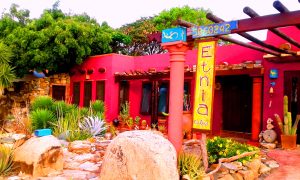
Article by Etnia Nativa call us 592 2702 and book your experience!
Etnia Nativa explores Aruba’s indigenous heritage and the ancestral wisdom passed down by its earliest inhabitants—knowledge of survival, medicinal plants, practical craftsmanship, celestial navigation, and the reading of weather patterns. These traditions, preserved across generations, continue to shape Aruba’s cultural identity and affirm the enduring bond between the island, its people and the land.
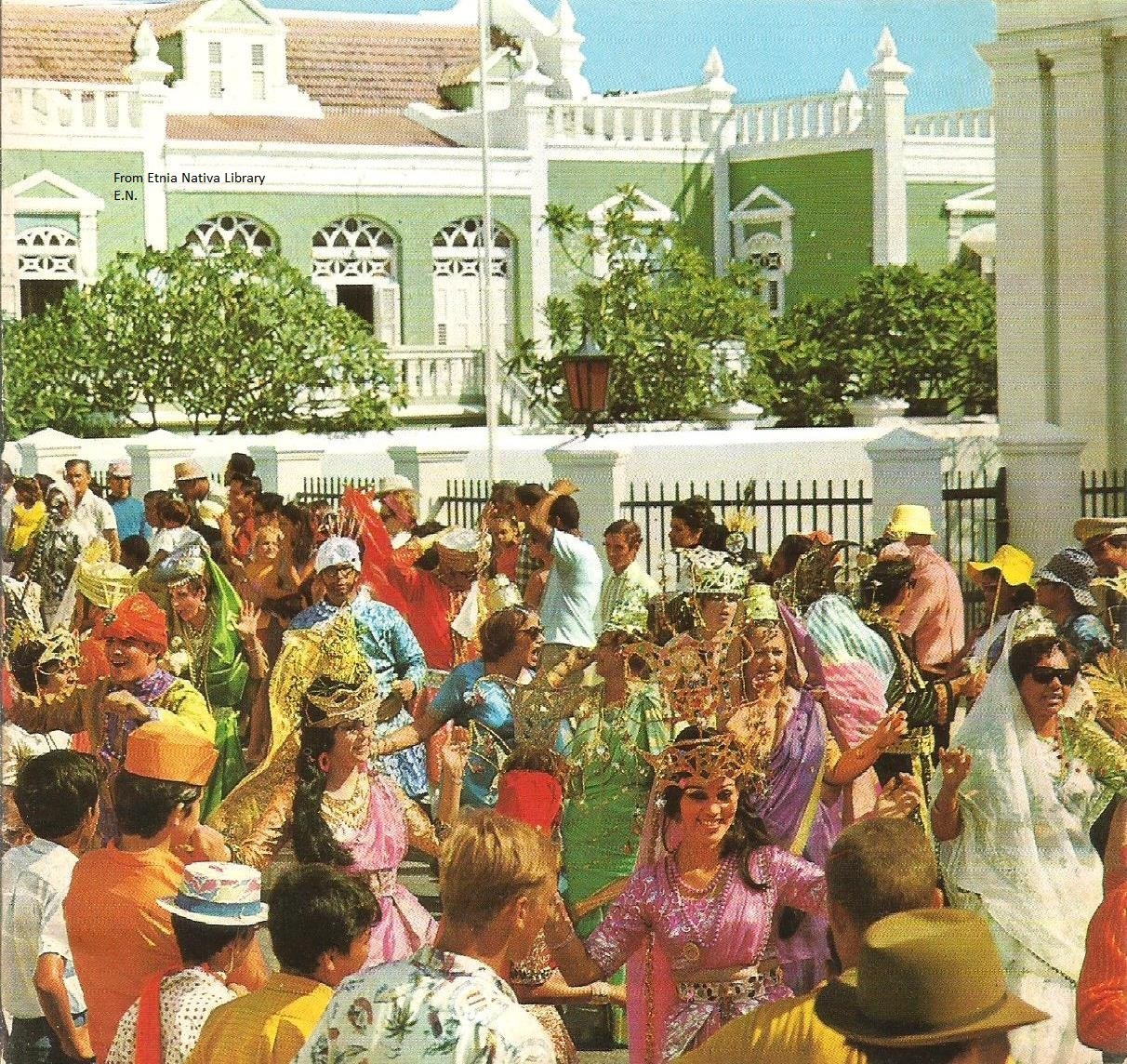
In this new episode, Etnia Nativa turns its focus to a rich and complex festive cycle that, through demonstrations charged with satire, creates for a few days a universe ruled by scandal, nonsense, and debauchery: CARNIVAL.
During these days, societies around the world turn themselves upside down: what are taken seriously throughout the year become parody, mockery, and exaggeration. Carnival, viewed from a transgressive perspective, functions as a collective judgment of the year, constructing a living chronicle of social concerns, tensions, and desires. This capacity to reflect societal anxieties, gives Carnival an added symbolic and expressional value.
The term carnival derives from a Latin idiom ” carnem levare” or “carnis levale”, meaning “farewell to meat” or “the removal of meat,” and refers to the Lenten period during which early Christians abstained from eating meat. This interpretation aligns closely with the concept of Carnival, as it reinforces the idea of the celebration preceding Lent—a time when Catholics refrained from worldly excesses, including overindulgence in food.
Another explanation traces the origin of Carnival to medieval Portugal, where the term is believed to have emerged from celebrations marking the arrival of spring in Europe. These festivities featured parades with colorful and decorated naval floats (currus navalis) and allegorical ship-shaped processions, practices that were also present in ancient Greece and Rome. Consequently, it is suggested that the Latin expression currus navalis may have contributed to the formation of the word carnival.
As a popular expression, Carnival adapts to social change while preserving a strong link between past and present, and between the individual and the community. It ensures the continuity of original local social groups, even as debates emerge between values of use (identity and tradition) and values of change (tourism and commercialization). The greatest threats to traditional Carnival are the accelerated pace of modern change and the homogenizing effects of globalization. Although many celebrations increasingly imitate “world Carnival programs,” Carnival consistently reveals two distinct versions: one deeply rooted in ancient customs and religious traditions, and another that is more grotesque, spontaneous, and street-oriented.
The informal version, often connected to contemporary trends and Caribbean pop culture, represents a turning point in which conventional social structures are temporarily dismantled and replaced by alternative ones. This process allows each society to reshape Carnival according to its own cultural reality. It is precisely in this space that identity emerges. Each community expresses its uniqueness through its heritage, as Aruba has done—shaped by a distinct way of life that existed both before and beyond the rapid social pressures of imposed change.
In Aruba, Carnival stands apart from other traditions such as Dera Gai, as it is a celebration in constant transformation. This dynamic nature highlights the importance of education in protecting intangible cultural heritage. Intangible heritage serves as a repository of collective memory, forming the foundation upon which social groups are built. While traditions naturally evolve, they continue to be nourished by meaningful ways of life created and preserved by the people who practice them.
Modern Carnival in Aruba has been strongly influenced by English-speaking Caribbean islanders, particularly Trinidad, through elements such as steel bands and calypso rhythms. These influences coexist with older regional religious expressions deeply connected to the Roman Catholic Church, which historically acted as a protector of the native population and shaped many aspects of social behavior through seasonal processions and popular celebrations. The result is a uniquely Aruban Carnival—one that blends African, Caribbean, European, and local Native American elements into a vibrant cultural expression.
Ultimately, Carnival in Aruba is more than a festive event. It is a living cultural dialogue between tradition and modernity, resistance and adaptation, memory and reinvention. Through Carnival, Aruba continues to celebrate its identity while navigating the challenges of a changing world. At the same time, Carnival is also a vital commercial season that many people depend upon.
Step beyond the beaches and resorts to engage with the heart and soul of Aruba’s heritage visit Etnia Nativa, by appointment only: WhatsApp +297 592 2702 etnianativa03@gmail.com