





Los Angeles, United States
A “widespread and significant” heat wave is predicted to bring oppressive temperatures to drought-hit western U.S. states over the weekend, with all-time records at risk of falling, the National Weather Service said Friday.
A developing heat dome will spread from northwestern states through the northern plains, where temperatures could hit 110F (43C) on Sunday.
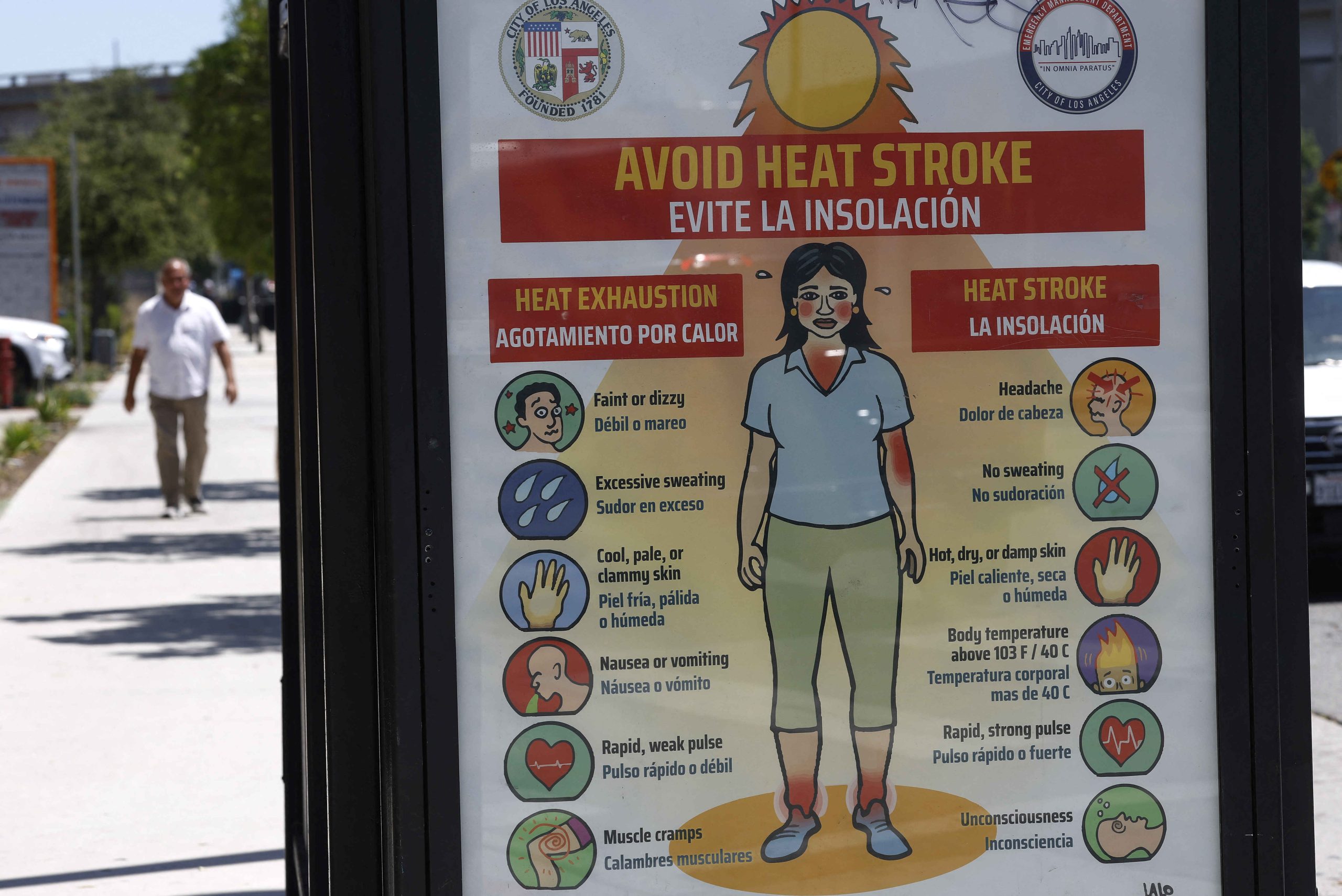
“Extremely hot daytime highs combined with potentially record-warm overnight lows will result in increasing heat stress, leading to widespread major to locally extreme HeatRisk,” the agency said.
“Extreme” is the highest level on the NWS’s HeatRisk scale, with impacts affecting anyone without cooling or hydration. Energy grids are also expected to come under strain.
Marc Alessi, a science fellow at the Union of Concerned Scientists, told AFP the heat wave is “occurring in a fundamentally different system” under the influence of human-caused climate change.
“The ocean-atmospheric system is so different, and there are marine heat waves in every ocean basin in the world right now releasing just a ton of heat into the atmosphere, no doubt influencing weather patterns throughout the planet and leading to these absolutely unprecedented heat waves.”
Alessi added that a brewing “super” El Nino in the equatorial Pacific could also be influencing the heat dome.
“Already we are starting to see sea surface temperatures in the central Pacific warm up drastically,” he said.
“Because of this, the storms in the Pacific are sending out energy in a different way from the tropics to the mid-latitudes, which then affects the jet stream in such a way that it will allow this heat dome to basically build up in the western United States.”
The latest heat wave follows similar events that roasted the central and eastern United States last week, and Europe before that.
Scientists from the World Weather Attribution group released an analysis showing the hot and humid conditions that characterized the past U.S. hot spell — which fell as the country celebrated its 250th anniversary — would have been “virtually impossible” without human-caused climate change.
Hot and windy conditions will meanwhile bring elevated wildfire conditions, with much of the western United States already experiencing abnormally dry to drought conditions.
Heat domes also cause “dry thunderstorms” where rain evaporates before hitting the surface and lightning strikes are liable to trigger wildfires.
A National Interagency Fire Center prediction map showed the states of Washington, Oregon, Idaho, Montana and Wyoming at particularly elevated risk.