
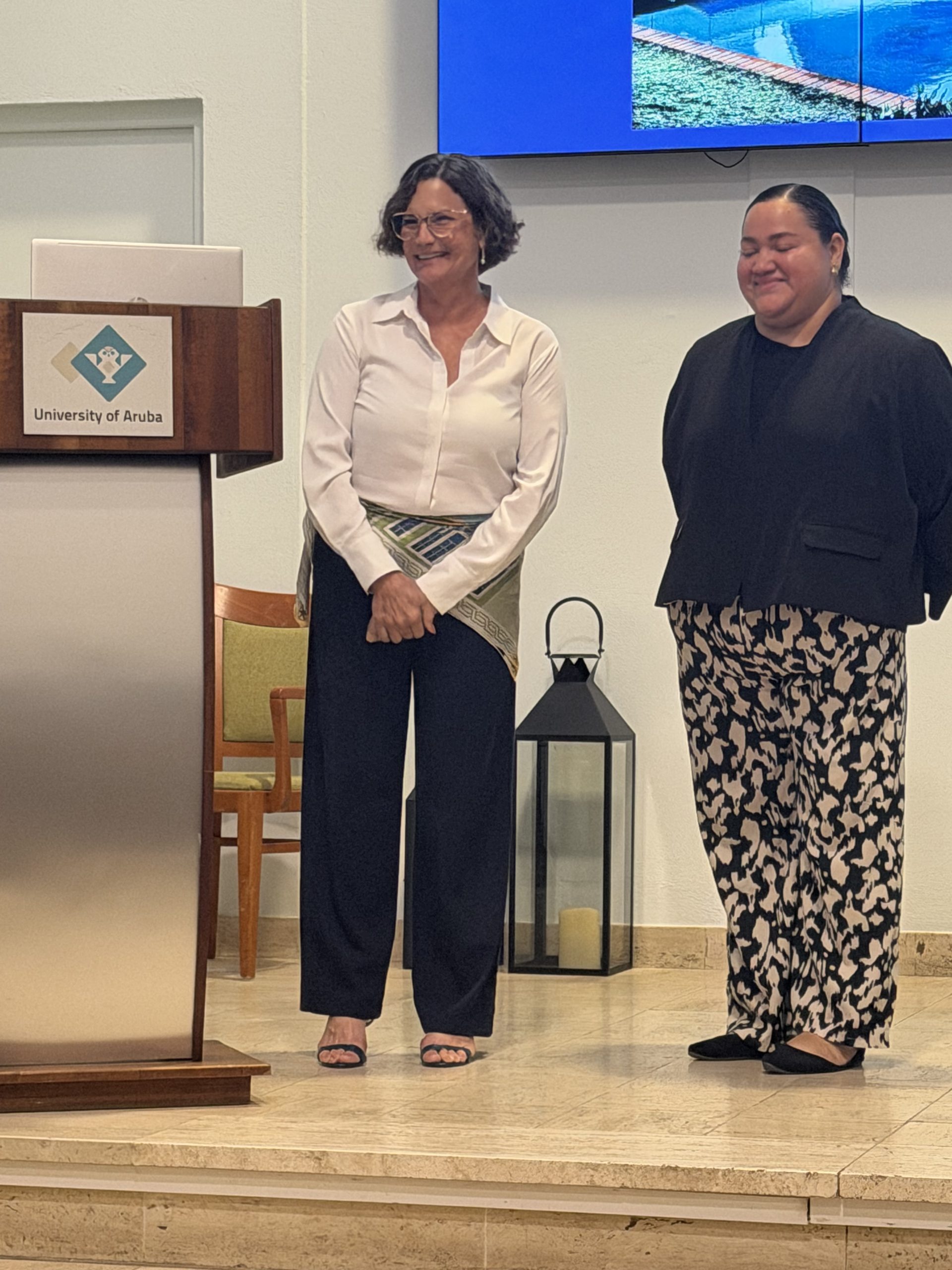



ORANJESTAD – Renovating is always better and cheaper than demolishing and rebuilding, especially when dealing with buildings or houses older than 50 years. That is what Daphne Every, architect and Monument Advisor, emphasized during a lecture at the University of Aruba.
Daphne Every, MSc, was responsible for the restoration project of Cas Veneranda, but her knowledge goes far beyond that. A graduate of UNC and UPenn, she already won the prestigious Merit Award from the American Society of Landscape Architecture while still a student. Among other things, that opened doors for the Aruban to work with the Disney company designing luxury hotels. Every returned to Aruba in 2008, where she transitioned into restorative architecture and became the local expert in heritage preservation.
Within the framework of her upcoming project, the restoration of the buildings of Juliana School and Beatrix School, she also opened the door for a university student, Jennifer Wever, to complete an internship. An internship that opened the eyes of the EPI Bouwkunde graduate, who is preparing to enter her final year of Organization, Governance and Management at the Faculty of Arts and Science (FAS) of the University of Aruba. Wever completed her internship with a presentation that was considered important for the entire community.
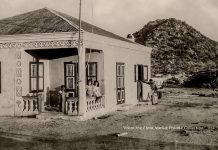
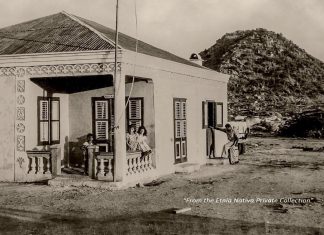
The lecture, organized by the Center of Lifelong Learning of the University of Aruba, carried the theme “Architecture and Heritage of Aruba,” which explored the evolution of Aruba’s unique structural identity, from traditional cunucu houses to other Dutch colonial constructions. In addition to giving a brief history of these constructions, the session focused on the cultural significance of Aruba’s structural heritage, which can be catalogued as the physical soul of Aruba’s collective memory.
An important aspect of the lecture was to deconstruct persistent social myths and misconceptions that often obstruct conservation efforts. It also addressed the mistaken and common ideas regarding the complexity between private and public property, and the common belief in Aruba that restoring a monument is an insurmountable financial burden. Affordable funds from the Netherlands have been made available for restoration, and although these are intended for commercial projects, there are also movements aimed at helping individuals and families restore traditional Aruban homes.
Jennifer Wever had always been interested in creation. After EPI, she went to the Netherlands to study International Spatial Development. Even so, she herself had not been fully aware of the value and beauty of Aruba’s old buildings and houses, which are often left abandoned. Her internship changed that perspective. For that reason, she titled her presentation: “An internship changed the way I view heritage preservation.”
“My future is connected to it now,” Wever said. But to guarantee a future, information is needed, and one of the problems is that data about old houses and buildings is scarce and scattered everywhere. “I called them islands of information, which made me realize that what we know about our heritage is incomplete.” On the other hand, Wever said she was surprised by what she was able to discover. Her period at EPI focused on functionality and efficiency, which often suggested that it was “better to start over.” But after analyzing monuments, she became fascinated by the amount of detail that went into old buildings. Details that illustrate a deep understanding of Aruba’s climate. The Juliana School building, for example, was designed with the environment in mind, including how to deal with rain. This realization showed Wever the value of preserving heritage, not only to protect the buildings themselves, but also to incorporate this knowledge into future projects, especially the innovative and sustainable aspects of “old” buildings.
Passion
For Daphne Every, preserving Aruba’s structural heritage is more than work — it is her passion. Every reviewed what architecture is, explaining that besides design and construction, it is also part of culture. “They are symbols of art and history. You do not need to visit a museum to see them. You can pass by them, or even live in them. And historic architecture is the best representation of a design that is the result of the place where it is located, meaning it captures the spirit of that place.” In other words, it encapsulates the history and landscape of a country, and that applies to Aruba as well.
Not every old building is a monument, however. Modernization has existed in every era. Therefore, for a building to be designated as a monument, it must be at least 50 years old and preferably remain intact in terms of its original appearance.
And this is where Every addressed the mistaken ideas that exist regarding restoration. Changes can be made to monumental buildings, as long as regulations are followed — for example, the street-facing façade must remain original. Even the color can be changed. Not to mention the interior, because the function does not always stay the same. Furthermore, it is not always possible to find the same materials that were originally used. “So you have to be flexible and look for alternatives without taking away the originality, in order to preserve the essence of the structure.” That also happened with Cas Veneranda, which was restored with all modern necessities while still complying with sustainability and efficiency standards.
The myth that these buildings cost more to restore than to simply demolish must disappear, Every emphasized. Walls in the past were thicker, which helps regulate temperature; their placement and the design of features such as windows help keep these buildings and houses very cool; and the materials that can be salvaged are of better quality than those available today. In addition, lime was previously used for plaster instead of cement. According to Every, lime is not only better, but also better for the environment because it absorbs CO2.
Daphne Every also highlighted the possibilities for businesses to gain access to affordable restoration funds, as well as the efforts by the Government of Aruba to help families around Aruba preserve their homes. In fact, work will soon begin on identifying two monuments in each district that will be restored in order to preserve the character of the area while also encouraging individuals to do the same.
The presentation in the Aula of the University of Aruba was well attended, something the presenters were very pleased with, because it illustrates interest in a topic that can help change the perception that restoration of Aruba’s architectural heritage is something highly important and achievable for Aruba.