




Aruba’s Hidden Past: The Story Buried in Sand
Etnia Nativa: Your peek into Native magic, healing the spirit.
Article by Etnia Nativa call us 592 2702 and book your experience!
Aruba’s history runs deeper than most visitors realize. Every week, we at Etnia Nativa unveil the island’s ancient pathways, uncovering traditions and stories that continue to shape its cultural roots. In this episode, curious travelers are invited to discover a hidden truth: Aruba’s past stretches far beyond its postcard beaches. Etnia Nativa reveals the enduring connection between the island’s spirits, its people, and the land itself—a connection that has sustained life for millennia.
Long before Western civilization reached these shores, Aruba’s first inhabitants arrived. These Paleolithic hunter-gatherers crossed the seas in canoes nearly 15,000 years ago. Their presence may be subtle to the untrained eye, but meticulous archaeological research has uncovered activity sites, human remains, and artifacts: flint and stone tools, projectile points, hearths, and objects crafted from seashells.
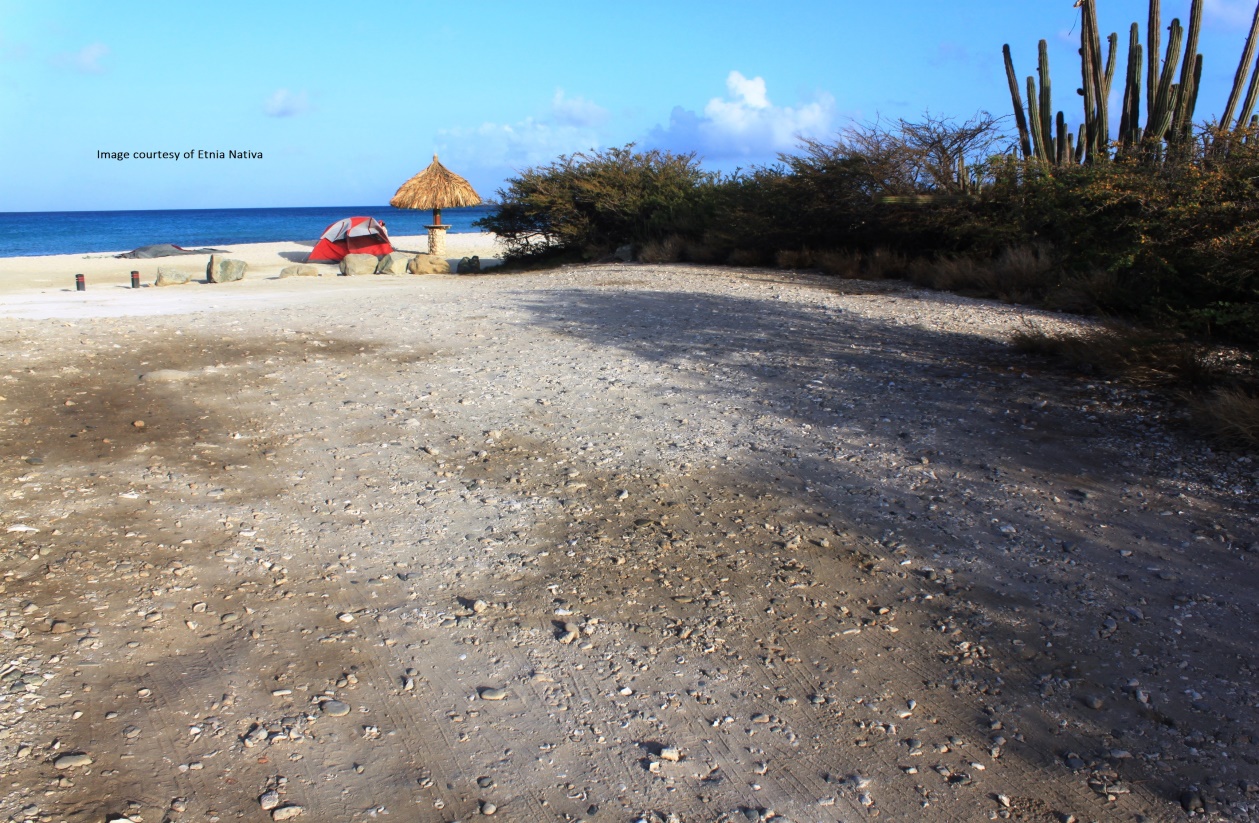
From the rocky coasts near Malmok to Arashi and beyond, these early sites were centers for fishing, gathering, and daily survival. The naturally saline soil in some areas, where they buried their dead, has remarkably preserved teeth and bones, allowing researchers to reconstruct elements of early Aruban life. Most other organic artifacts have long since decomposed, leaving behind only traces—rock art, shell mounds, and remnants of daily activity.
Among Aruba’s most significant archaeological treasures are shell middens—ancient refuse heaps of sand, shells, stones, and pebbles. Typically located within fifty meters of the shore along the south and west coasts, these middens are windows into the past, containing fish, bird, reptile, and mammal bones, charcoal, prehistoric pottery, and even remnants from later European settlements.
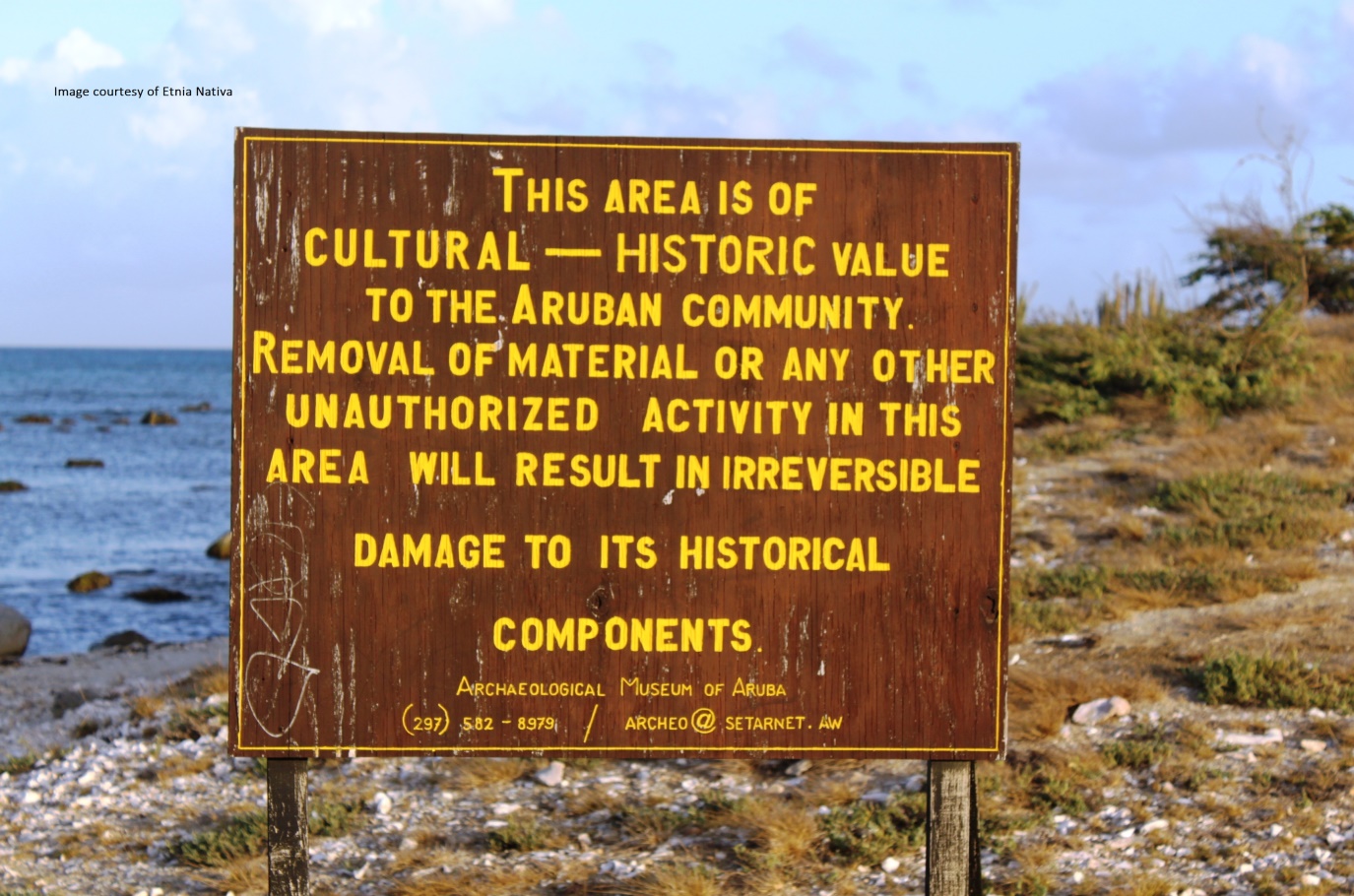
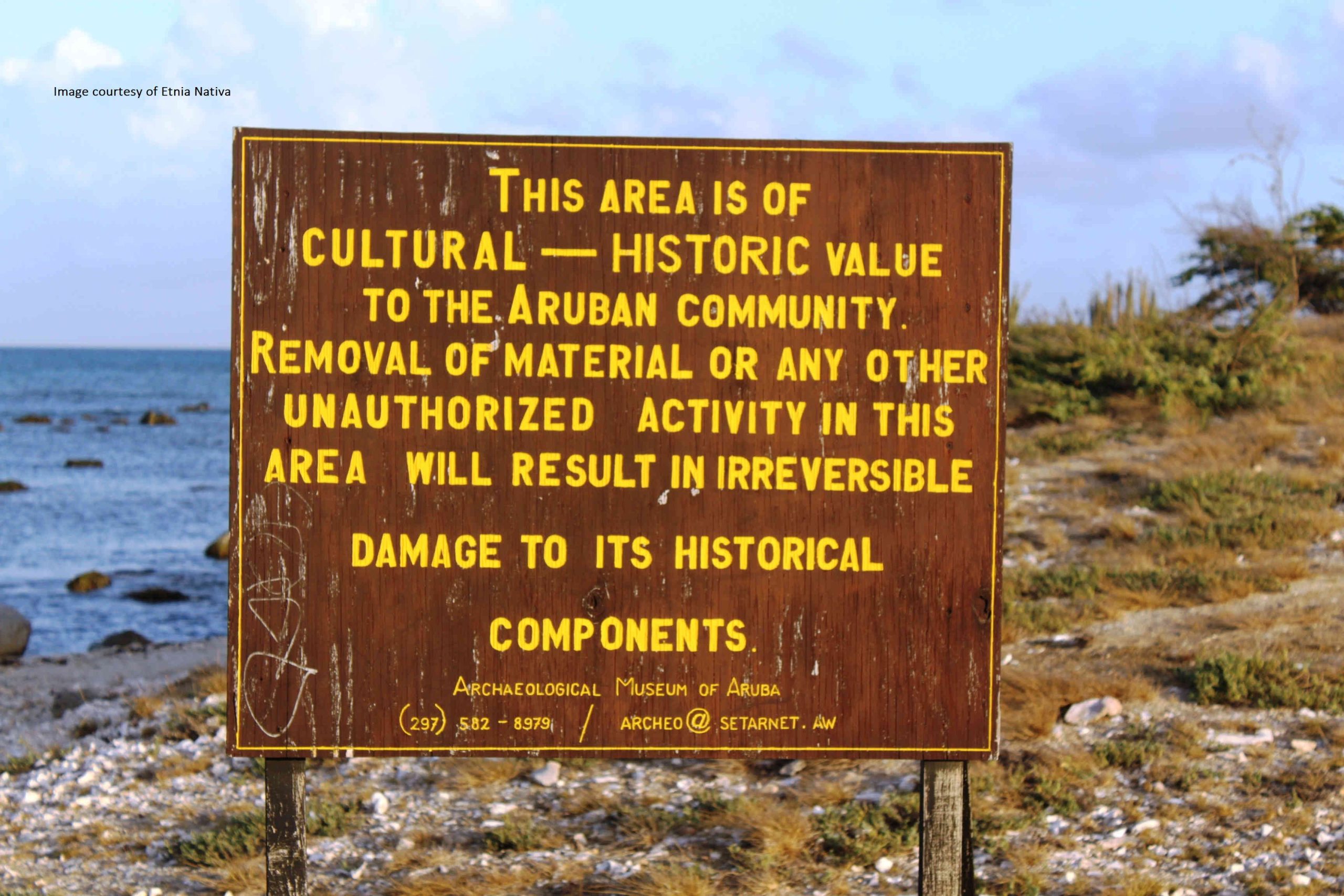
Middens were used across different periods. Their deposits often mix materials from the Paleolithic era, the ceramic agricultural period, and early European colonization. Later layers may include glass, metal, pottery, and bones of introduced animals like goats, cattle, and pigs. Some of Aruba’s largest middens now lie beneath modern developments, including hotel zones. The Arashi Midden has been the focus of preservation efforts for decades. Initially protected with boulders to block access, it now faces erosion from public negligence. Each careless activity chips away at this irreplaceable link to Aruba’s past.
Efforts to protect the Arashi Midden began some 30 years ago, when boulders were placed to block access. For a time, this prevented campers and vehicles from damaging the site. But today, the stones have been moved, and public negligence is eroding the Midden.
So, what exactly is a Midden? The term comes from Middle English, meaning a household rubbish heap. Archaeologists use it to describe the piles of materials discarded by humans. Studying middens reveals what people ate, the tools they used, and how their environment changed over time. Radiocarbon dating of bones, shells, and charcoal helps researchers determine when sites were occupied, offering a timeline of human activity.
Early Aruban diets were rich and varied. Hunters relied heavily on manatees and monk seals, prized for their protein and fat. As these resources became scarce, they supplemented their diets with shellfish, turtles, birds, rabbits, iguanas, etc.. Seeds, land snails, and charcoal from middens help reconstruct the island’s lost ecology, offering clues to past vegetation and human impact on the environment. Unlike oral histories or official records, which often focus on leaders or major events, middens reveal the everyday lives of ordinary people—their survival strategies, food sources, and tools.
Protecting these sites is vital. Every step along Arashi and other coastal areas may conceal thousands of years of human history. Respecting these fragile middens ensures future generations can learn from the resilience and ingenuity of Aruba’s earliest inhabitants.
For those seeking more than the surface beauty of Aruba, Etnia Nativa offers a rare experience: a personal encounter with the island’s ancestral soul. Here, heritage is not just preserved—it is lived. The story of Aruba’s past is buried in humble sand dunes, waiting to teach us about resilience, ingenuity, and the daily lives of those who came before.
Aruba’s history rests in the sand, and if we fail to honor it, its stories may disappear.
Personal experiences with Etnia Nativa are available by appointment: WhatsApp +297 592 2702 etnianativa03@gmail.com