



PIGEON FORGE, TN — For most six-year-olds, a long car ride involves a steady stream of “Are we there yet?” and tablets playing cartoons. But for Weston Montgomery, the journey from his home in South Carolina to the rolling foothills of the Great Smoky Mountains was different. Weston wasn’t looking for cartoons; he was looking for icebergs.
Clad in a miniature wool captain’s coat and clutching a well-worn book about the 1912 disaster, Weston believed he was on a routine trip to visit his grandmother. He had no idea that his parents, Sarah and Michael, had spent months orchestrating a surprise that would bring the history he lived and breathed into sharp, chilly reality.
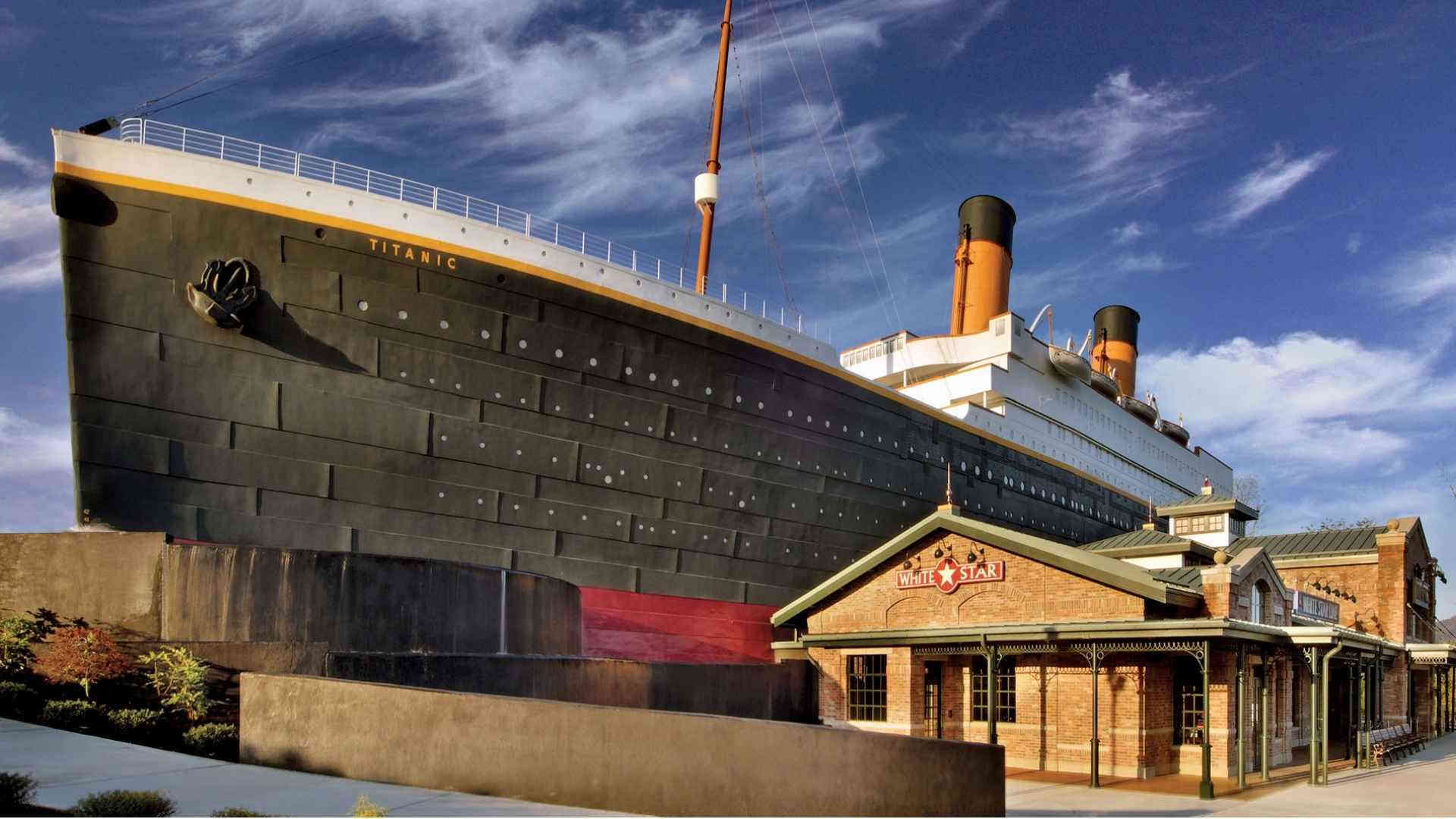
The moment the Montgomery family’s SUV rounded the bend in Pigeon Forge and the massive, scale-model prow of the Titanic Museum Attraction loomed over the Parkway, the silence in the backseat was broken by a gasp so sharp it seemed to steal the air from the car. The video of the encounter, captured by Sarah on her phone and later shared with millions online, shows Weston pressing his face against the glass, his eyes widening to the size of dinner plates.
“Is that… is that the ship, Dad?” he whispered, his voice trembling with a mix of disbelief and reverence. When his father confirmed they were stopping, Weston didn’t scream or cheer. He began to cry—quiet, overwhelmed tears of a boy seeing his hero for the first time.
A Prodigy of the Past
Weston’s obsession with the RMS Titanic began when he was four, triggered by a chance encounter with a documentary on public television. While other children his age were memorizing the names of dinosaurs or superheroes, Weston was memorizing the tonnage of the Olympic-class liners and the specific temperature of the Atlantic water on the night of April 14, 1912.
“He doesn’t just like the ship; he respects it,” says his mother, Sarah. “He knows the names of the musicians who played on the deck. He knows the difference between the Scotch boilers and the engines. It’s a level of focus we’ve never seen in a child his age.”
The Titanic Museum Attraction, one of the world’s largest permanent Titanic museums, is more than just a collection of artifacts; it is a somber memorial. Upon entry, every guest is given a boarding pass featuring the name of an actual passenger or crew member. Weston was handed the card of John “Jack” Phillips, the senior wireless operator who famously stayed at his post until the very end.
Walking the Decks
The staff at the museum, alerted by the viral interest in Weston’s arrival, gave the young “Captain” a welcome befitting his passion. Lead docents, dressed in period-accurate officer uniforms, saluted Weston as he entered.
The highlight of the visit was the Grand Staircase, a $1 million replica built from the original blueprints of the Harland and Wolff shipyard. As Weston climbed the stairs, running his hand along the ornate oak carvings, he stopped at the clock—the same design seen in the 1997 film and the historical photos. For a moment, the bustling museum seemed to go silent.
“He stood there for five minutes just looking at the clock,” Michael Montgomery recalled. “He told me, ‘Dad, this is where the people felt fancy.’ He has this incredible ability to empathize with the people who were actually there.”
The most emotional moment of the tour occurred at the Memorial Wall, where the names of the 2,208 passengers and crew are etched into glass. Weston insisted on finding Jack Phillips’ name. When he found it, he placed a small, plastic Titanic model he had brought from home at the base of the wall.
The Power of Curiosity
The story of Weston’s surprise has resonated far beyond the borders of Tennessee. In an era dominated by digital distractions and fleeting trends, the image of a young child deeply invested in a historical event from over a century ago has struck a chord.
Dr. Aris Whitaker, a child psychologist specializing in gifted learners, suggests that Weston’s “superfan” status is a beautiful example of deep-dive learning. “Children like Weston find an anchor in history. The Titanic is a story of grand engineering, human bravery, and tragedy. It provides a framework for a child to understand the world’s complexities. Seeing his joy reminds us all of the power of genuine curiosity.”
The museum’s owner, Mary Kellogg-Joslyn, was moved by Weston’s visit. “Our mission is to keep the stories of the 2,208 souls alive,” she said in a statement. “When we see a child like Weston, we know that history is in good hands. He isn’t just looking at a ship; he’s carrying a legacy.”
An Unforgettable Voyage
As the family prepared to leave, the museum presented Weston with a special “Officer-in-Training” certificate and a piece of coal recovered from the 1994 recovery expedition—a genuine piece of the ship he had spent half his life studying.
For Weston, the trip wasn’t about the gift shop or the photos. It was about the connection. When asked what his favorite part was, he didn’t mention the grand staircase or the cold water tank that simulates the ocean’s temperature.
“I liked that I got to be there,” Weston said, adjusting his captain’s hat. “The ship is big, but the stories are bigger. I want to make sure no one forgets them.”
As the Montgomerys drove away, Weston sat in the back, his piece of coal held tightly in his hand. He wasn’t looking at a screen or a book. He was looking out the window, watching the prow of the ship disappear into the sunset, already planning his next voyage into the past.
In the heart of a six-year-old, the “Unsinkable” ship has found a permanent home, proving that some legends never truly rest at the bottom of the sea—they live on in the eyes of the next generation.