




Etnia Nativa: Your peek into Native magic, healing the spirit.
Article by Etnia Nativa call us 592 2702 and book your experience!
In this episode, Etnia Nativa shares a historic scientific journey across Aruba.
It all happened in the opening days of 1885, our island found itself briefly transformed into a stage for scientific curiosity and cultural exchange. Among its visitors was the distinguished German professor, Dr. K. Martin of Leyden University, a man whose passions stretched from the rugged language of geology to the delicate beauty of moths and butterflies. He was not alone; a small academic party accompanied him, including students Van der Pol, De Haan, and Molengraaff, as well as Professor Dr. Suringa.
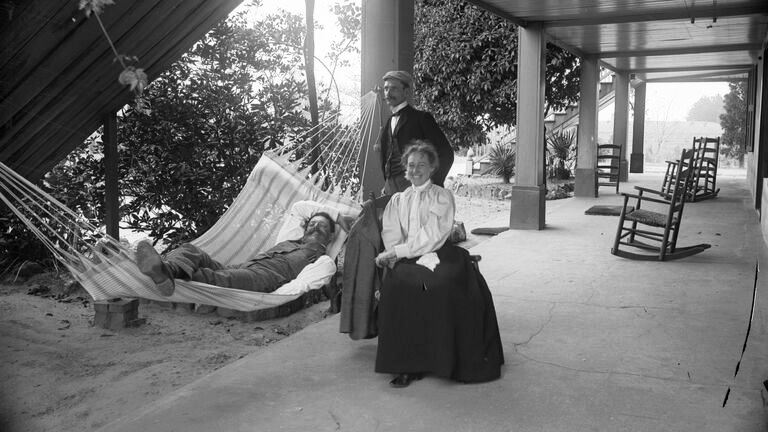
What began as a journey for agro-geological research would leave a far more lasting imprint than expected. Beyond scientific observations and fieldwork, the expedition produced a written account of enduring cultural and historical value—one that captured not only the land, but the lived experience of traversing it. Among the lessons learned, one stood out with almost humorous gravity: a firm warning never to travel without a hammock. It was a simple yet telling piece of advice, hinting at the challenges of a landscape both beautiful and unforgiving.
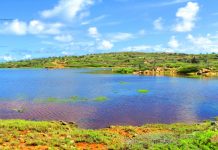
The group later set out for Jamanota, where they were astonished to find a small puddle of fresh water nestled in exposed slate. Their guide scooped tadpoles from it—an unexpected sight in Aruba’s dry season.
The encounter led to a fascinating revelation. While the locals spoke of the dori, a frog believed to disappear deep into the earth during drought—sometimes at depths of several meters—the expedition instead found a fully grown specimen said to be of a mako, a different kind. This suggested that Aruba was home to two species of amphibians a frogs and a toad, a striking contrast to neighboring islands like Curaçao and Bonaire, where frogs were not found at all.
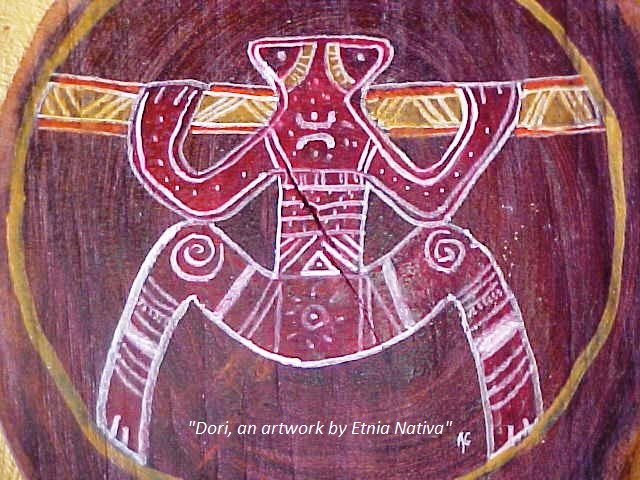
The dori itself held deep cultural significance. See our Episode 281, ‘Dori, the Native Froggy,’ for details. Appearing in great numbers at the start of the rainy season, it was seen by inhabitants as a symbol of relief and fertility—a harbinger of life after long periods of drought and hardship. Its importance stretched back centuries; frog figures were carved into the artifacts of the island’s ancient inhabitants. Even in Martin’s time, people still sang simple, songs in its honor, preserving a tradition that spoke to both survival and reverence for nature.
Martin recorded a haunting fragment of local folklore, sung softly by an elderly woman:
“Dori, dori mako, si mi muri… ken ta dera?”
Dori, dori mako… if I die, who will bury me?
The haunting simplicity of this traditional verse reflects the deep cultural resonance of the frog in Aruba’s past. Yet, as later clarified, the song likely refers not to the small dori, but to the larger “sapo,” or cane toad—another ever-present nighttime croaker whose calls accompany the promise of rain and harvest abundance.
Professor Martin’s journey across the island captures both the harshness and wonder of Aruba’s terrain. He describes how his party pressed forward “through the dense undergrowth of spiny trees and cacti,” enduring scratches, torn clothing, and exhausting detours across dry streambeds as they navigated the rugged north coast.
Their travels brought them to Miralamar, a site once rich with gold-bearing quartz and the remains of a now-abandoned English mining venture. A day later, fatigue had set in; even the donkeys refused to move. Forced to remain near Fontein, their guide could only reassure them with the words, “poco, poco”—slowly, slowly.
The following morning offered new discoveries. A short distance from Fontein, the group explored a stalactite cave, which Martin believed had once sheltered the island’s early inhabitants. Though now occupied only by bats and rats, the caves still bore traces of indigenous life in the form of drawings etched into their walls.
Continuing along the coast, the expedition reached Daimari, a remote settlement that, at the time, consisted of a single modest dwelling by the bay. The house, sparsely furnished with hammocks, a crude table, and fragile chairs, reflected the simplicity of island life. Outside stood a small cooking shelter, open to the breeze, and—surprisingly—two markers of ingenuity: a simple sundial and a wind gauge fashioned from calabashes.
Here, Martin met a man of mixed heritage whose life reflected both fortune and loss, having earned and squandered twenty-four thousand guilders. Such fragments form a vivid portrait of nineteenth-century Aruba—a place where endurance and resilience shaped life, and where even the smallest creatures, like the rain-calling frogs, carried the weight of hope.
Don’t just visit Aruba—live it, understand it.
Book your mystical experience with Etnia Nativa. Whats App +297 592 2702 etnianativa03@gmail.com