



ORANJESTAD – His Majesty King Willem-Alexander of the Netherlands paid an official visit to Aruba on March 18 in connection with two significant national milestones: the 40th anniversary of Status Aparte and the 50th anniversary of Aruba’s national flag and anthem. The visit formed part of the broader national commemoration of these historic moments, which are central to Aruba’s constitutional development and identity.
The official program began at the Cabinet of the Governor of Aruba, where the King met with Governor Alfonso Boekhoudt, as well as the Governors of Curaçao and Sint Maarten. This was followed by a protocol meeting at Fort Zoutman with members of Aruba’s Parliament and Council of Ministers, underscoring the institutional importance of the occasion.
From Fort Zoutman, the King participated in a ceremonial walk to the Government Administration Building, where the central commemoration ceremony took place. Along the route, scouts, schoolchildren, and members of the public formed a guard of honour. Upon arrival, the King inspected the armed forces in a symbolic gesture of respect for the historic significance of the day.
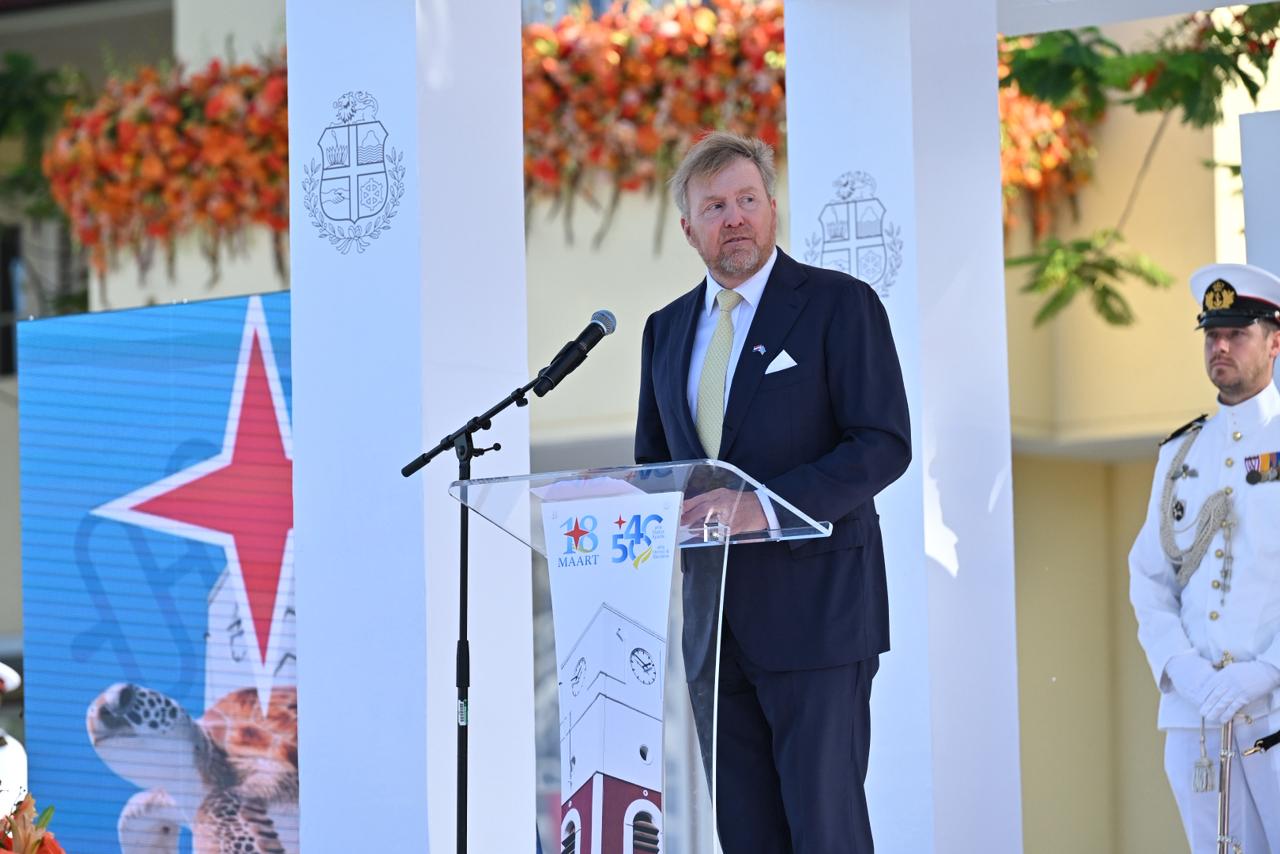
The ceremony officially began with the raising of the flags of Aruba and the Netherlands, accompanied by the Vaandelmars, followed by performances of both national anthems. In their official remarks, King Willem-Alexander and Prime Minister Mike Eman reflected on the historical importance of Status Aparte and the role of the national flag and anthem as symbols of identity and unity for the Aruban people.
Status Aparte, achieved on January 1, 1986, marked Aruba’s transition to an autonomous country within the Kingdom of the Netherlands, following decades of political and democratic struggle. Key figures such as Shon A. Eman and Betico Croes played a central role in this process, advocating for greater self-determination. The celebration also marked 50 years since the introduction of Aruba’s flag and anthem in 1976, enduring symbols of national pride.
Following the official ceremony, a cultural program showcased Aruba’s artistic talent and heritage, featuring musical performances, poetry, and choreography that highlighted the island’s cultural diversity. The ceremony concluded with a ceremonial march and a fly-by of two helicopters, symbolizing honour and recognition of the historic occasion.
As part of his visit, the King also attended a groundbreaking ceremony at the Roly Bislik Olympic Pool in Savaneta, marking the start of construction of a new warm-up pool. The project represents an important investment in Aruba’s sports infrastructure and aims to create additional opportunities for athletic development. During the visit, the King met with local athletes and sports representatives, emphasizing the importance of sports for youth and community development.
The program continued at the Royal Netherlands Navy base in Savaneta, where the King met with military leadership and Dutch ambassadors stationed in the region. Discussions with local and Kingdom officials focused on regional security, geopolitical developments, and the importance of continued cooperation within the Kingdom of the Netherlands.
Overall, the visit highlighted the strong ties between Aruba and the Netherlands, while serving as a moment of reflection on Aruba’s historical journey toward autonomy. It also reaffirmed a shared commitment to cooperation, stability, and mutual support within the Kingdom, as Aruba continues to build on its national identity and future development.