

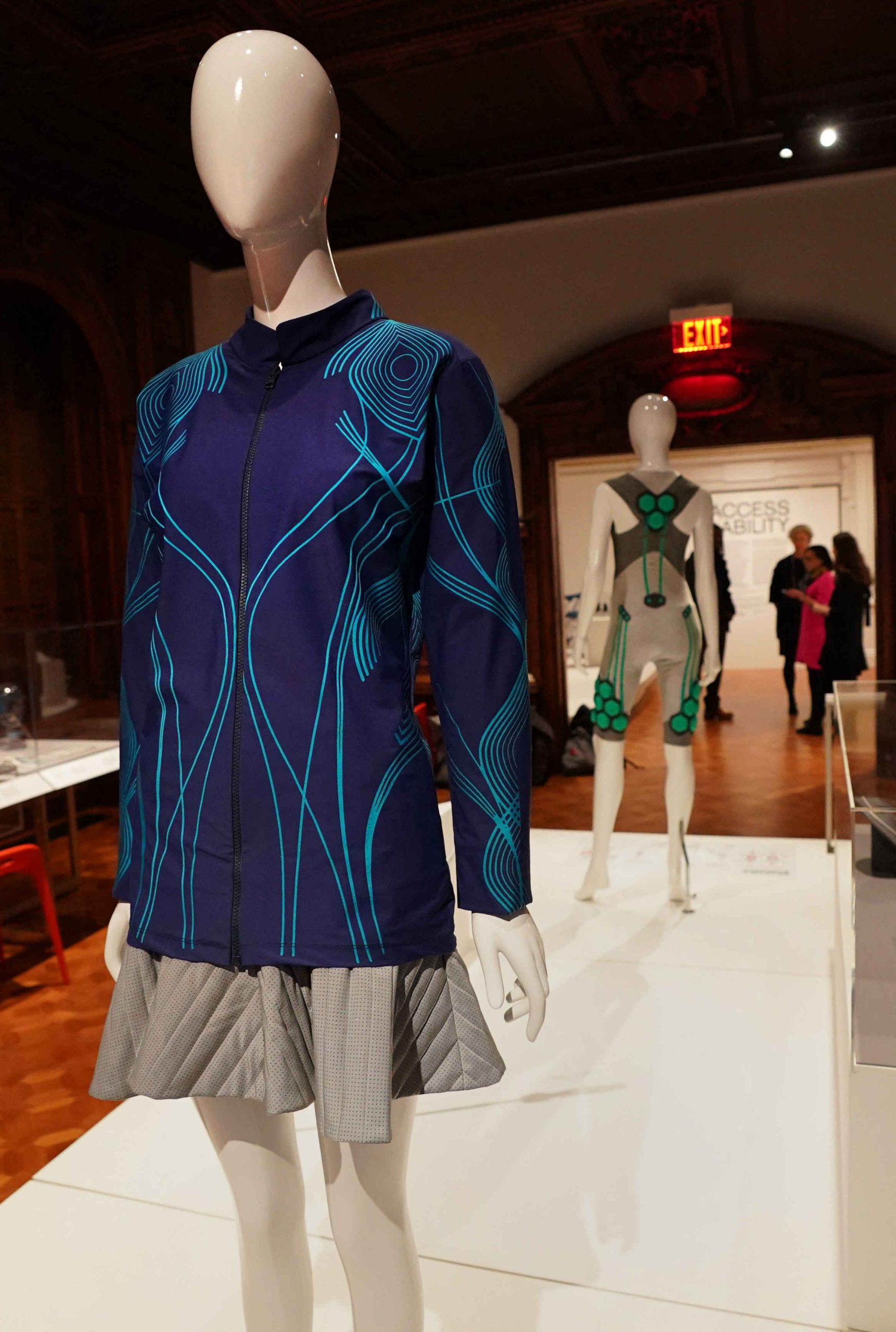




In a world where live music is often defined by the roar of speakers and the buzz of a crowd, a revolutionary piece of wearable technology is ensuring that the “sound” of an orchestra is no longer exclusive to those who can hear it. The SoundShirt, developed by London-based tech company CuteCircuit, is transforming the concert experience for the Deaf and hard-of-hearing community by turning symphonies into tactile sensations.
How Science Meets Symphony
The SoundShirt is a high-tech garment embedded with 30 micro-actuators (tiny motors) woven directly into the fabric. These sensors are wirelessly connected to a computer system that analyzes the live audio from an orchestra in real-time.
Each instrument is assigned a specific location on the body, creating a “spatial map” of the music:
Deep Bass: Heavily felt in the stomach and lower back.
Violins and Flutes: Light, fluttering sensations along the arms and shoulders.
Percussion: Sharp, rhythmic pulses across the chest.
As the conductor leads the ensemble, the wearer feels the music move across their skin, mimicking the way sound waves physically travel through space.
Breaking the Silence in Chicago
While the technology originated in Europe, it recently made headlines in the United States through a groundbreaking partnership with the Chicago Philharmonic. During their 2024-2025 season, the orchestra became one of the first in the U.S. to offer SoundShirts to audience members.
For many attendees, it was the first time they could distinguish between a cello’s mournful drawl and a trumpet’s bright fanfare. Users describe the experience not just as “vibration,” but as a nuanced, immersive language that allows them to follow the emotional arc of a masterpiece as clearly as any hearing person.
The Fashion of Inclusivity
Beyond its technical prowess, the SoundShirt is a marvel of sustainable fashion. CuteCircuit designed the shirts using smart fabrics—meaning there are no cumbersome wires or bulky battery packs. The garment is soft, stretchable, and looks like high-end athleisure, ensuring that wearers feel like a seamless part of the audience rather than someone using a medical device.
The shirt’s design reflects a broader movement in “inclusive design,” where technology is used to bridge the gap between different sensory experiences. By focusing on the haptic (touch-based) nature of sound, the SoundShirt acknowledges that music has always been a physical force—now, that force is simply being translated.
A Future Beyond the Concert Hall
The potential for the SoundShirt extends far beyond classical music. Developers are exploring applications in:
Gaming: To provide players with a 360-degree sensory environment.
Film: Allowing viewers to “feel” the tension of a cinematic score.
Museums: Creating tactile interpretations of sound-based art installations.
As the Chicago Philharmonic and other institutions continue to adopt this technology, the SoundShirt stands as a testament to human ingenuity. It proves that when we use technology to foster empathy and access, we create a world that is not only louder or faster, but more harmonious for everyone