



For the first time in a quarter-century, the entire state of California is officially free of drought and “abnormal dryness”. According to the U.S. Drought Monitor data from early January 2026, the state reached a milestone not seen since December 2000: a map with zero square miles categorized as dry.
This remarkable recovery follows an exceptionally wet period spanning late 2025 and early 2026, which effectively erased lingering deficits and replenished the state’s critical water infrastructure.
A Historic Milestone
The 25-year streak of at least partial dryness has finally broken. Just three months prior, nearly 70% of the state was experiencing some level of drought. However, a series of powerful atmospheric rivers and winter storms in December 2025 pushed the final holdouts—primarily in the far northern and southern regions—out of the drought categories.
By February 10, 2026, only roughly 1% of the state (about 1,105 square miles) was considered “abnormally dry,” with 0% in any formal drought stage.
Reservoir and Snowpack Status
The surge in precipitation has translated into healthy levels for California’s “savings accounts”—its major reservoirs. As of February 2026, the state’s 17 major reservoirs were at 129% of their historical average.
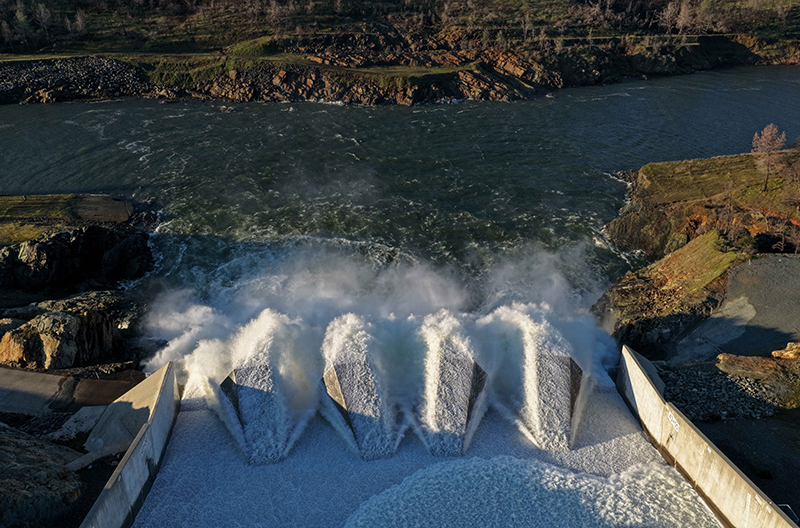
Lake Oroville: The State Water Project’s largest reservoir is at 134% of its average for this date.
San Luis Reservoir: Currently at 103% of its average.
Don Pedro & New Melones: Both holding steady above 125% of their historic averages.
While surface water is abundant, experts remain cautious about “snow drought” conditions. Although the rains filled lakes, warmer temperatures led to a thinner-than-ideal snowpack in some elevations, with snow-water equivalents recently measured at 71% of average for this time of year.
Looking Ahead: The “Hydroclimate Whiplash”
Governor Gavin Newsom and state water managers are framing this success as a testament to California’s Water Resilience Strategy, which includes aggressive stormwater capture and storage investments.
However, scientists warn of “hydroclimate whiplash”—a cycle where extreme wet periods are followed by sudden, intense dry spells. While the immediate threat has vanished, the California Department of Water Resources continues to urge conservation as the state prepares for the inevitable return of dryer cycles in the future.