




Long before Aruba had roads, churches, or even a name, its first inhabitants left messages behind—etched and painted into stone. Scattered across the island, hidden in caves and cradled by wind-worn boulders, these ancient markings still speak to us. They are Aruba’s rock art, among the island’s most powerful and least understood cultural treasures.
In this new episode we journey back thousands of years to explore the native Aruban rock art that continues to shape our understanding of the island’s earliest society.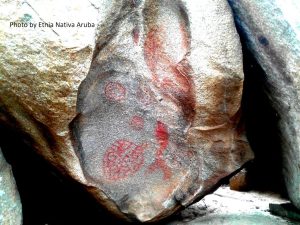
Aruba’s rock art is generally divided into two categories: petroglyphs and pictographs. Petroglyphs are images carved or pecked directly into exposed rock surfaces, while pictographs are painted, applying natural pigments—most commonly red ochre, but also black, white, or yellow dyes. These pigments were applied by finger, and in some cases, with brushes made out of animal hair or plant fibers.
To date, archaeologists have documented 301 pictographs and petroglyphs, an extraordinary number for such a small island. These are not random decorations. They are symbols of belief, ceremony, identity, and survival. Petroglyphs in particular are considered powerful cultural expressions, deeply connected to sacred landscapes where rituals and traditional ceremonies once took place. Every image matters—not only for what it depicts, but for where it appears. Context is essential; location is meaning.
One of Aruba’s most remarkable concentrations of rock art can be found in Arikok National Park, home to some of the island’s most beautiful and significant pictograph collections. Research conducted within the park revealed something extraordinary: four clusters of drawings aligned almost perfectly along a north-south axis spanning approximately 415 meters. While some drawings may appear as simple points or lines—perhaps intentionally minimal—when each distinct representation is counted, researchers estimate between 270 and 331 individual drawings spread across 17 sites.
In archaeological terms, drawings located within tens of meters of one another are considered part of the same site, and sites within a 500-meter radius forms a cluster. These groupings suggest intentional placement and planning by ancient artists and spiritual leaders, reinforcing the idea that the rock art was part of a broader religious or ceremonial landscape rather than isolated expressions.
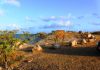
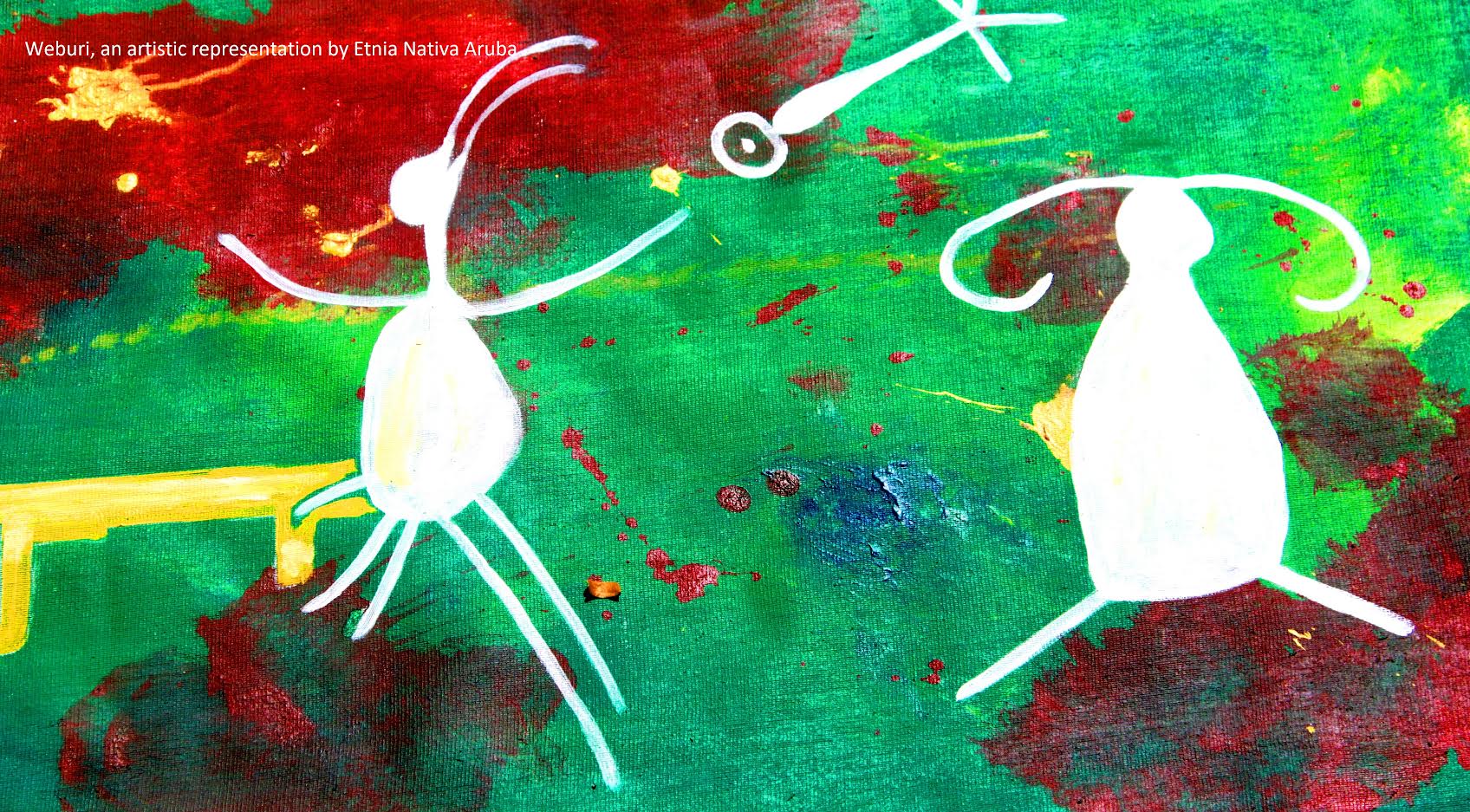
Another exceptional site lies at Weburi, in Piedra Plat. The name “Weburi” is said to mean the place where boulders standing in the blowing wind, a fitting description for this dramatic location. The site can be reached by traveling north from Hooiberg, Aruba’s iconic Haystack Hill. After climbing a few steps, explorers can distinguish these boulders in what northern direction, you can guide yourself though a nature walk toward a cluster of unusually round boulders.
Within one of these boulders, erosion has formed a hollow chamber with a west-facing entrance. Finding it can be challenging—but once inside, the reward is unforgettable. The interior walls are alive with red-pigmented drawings, covering the stone in a silent yet deeply moving display. The space feels intimate, almost ceremonial, as if the artists had intended their work to be seen only by those who truly sought it.
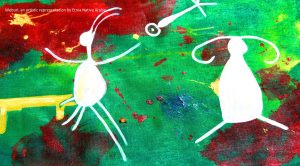
Through its work, Etnia Nativa continues to share this island knowledge, emphasizing the value and vulnerability of Aruba’s archaeological sites, rock formations, and historical monuments. Their mission extends beyond preservation—it encompasses respect for endemic flora and fauna, sustainable waste management, and awareness of how population growth impacts the natural environment and its historic value.
In a world that moves fast, these ancient drawings remind us to slow down, to simple listen, absorb and appreciate the calming rhythm of the ocean, the morning calls of nature, and perhaps most precious of all—the sound of silence.
We Arubans embraces our stones bolder heritage since many of them served as shelters against the elements, reunion spots, Aruba’s first storytellers and social centers harboring Rock art that are still speaking to us. The question is: are we listening?
Step beyond the beaches and resorts to engage with the heart and soul of Aruba’s heritage visit Etnia Nativa, by appointment only: WhatsApp +297 592 2702 etnianativa03@gmail.com